Concept · Design strategy & UX · 2021
Swarovski
A strategy and app concept to move a crystal house founded in 1895 up the design maturity ladder, with AR try-on, NFTs and a design-led culture inside.
As a group we analysed Swarovski, which creates exceptional crystal products. The brand, while prestigious, needed a modern push to engage the digital-native generation.
Bring Swarovski into the modern era with an AR app for virtual try-ons and NFTs, enhancing customer interaction while keeping its luxury appeal.
A business model and UI/UX concept showing how Swarovski could use AR and blockchain to drive digital engagement and modernise its customer experience.
Project overview
The aim
Bridge the gap between traditional retail and the digital future by developing user-centric service channels: creating design awareness inside the team while launching immersive customer experiences.
The vision
Establish a futuristic brand presence that culminates in a permanent digital showroom in the metaverse by 2035, supported by an NFT ecosystem and advanced AR.
The client
An Austrian company selling high-quality crystals, jewellery and accessories. Pioneers in crystal production since 1895, with a unique technological advantage over competitors.
Problem statement
Prestige, stalled
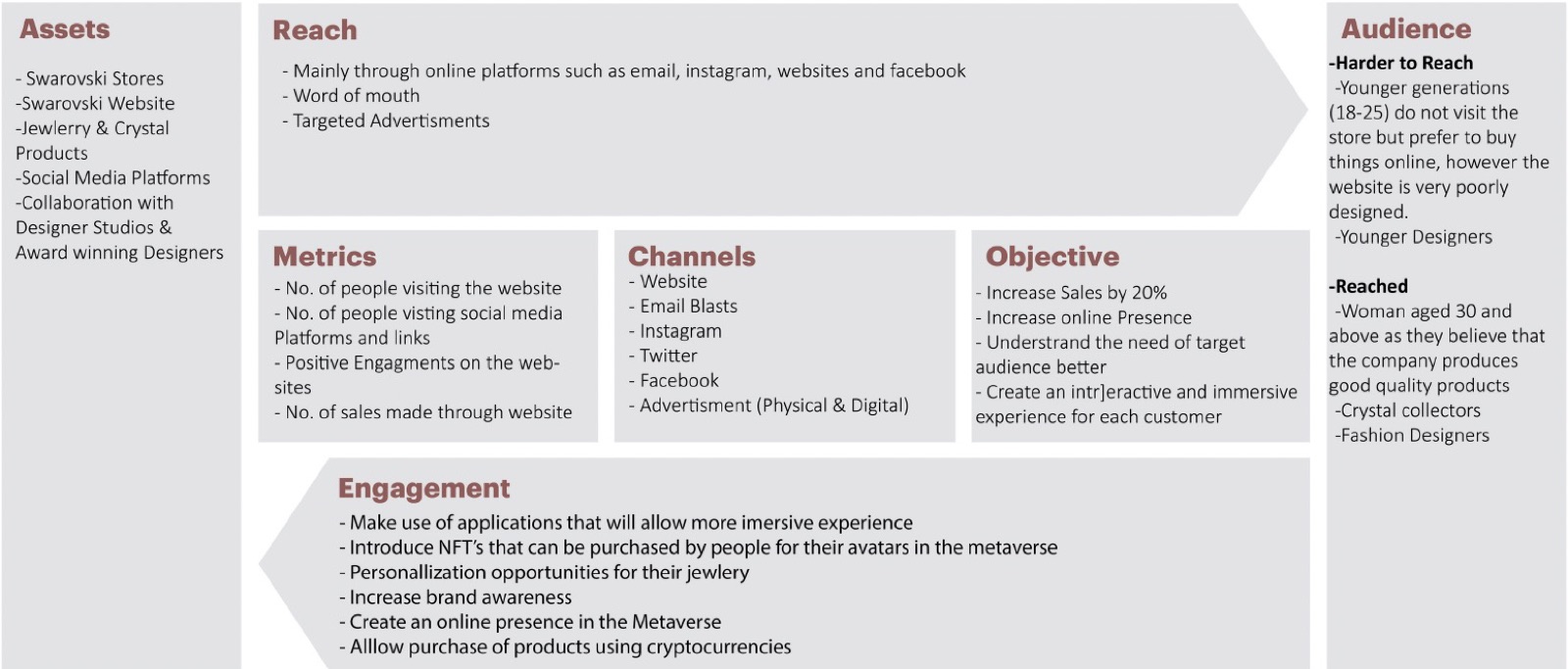
Swarovski's growth is hindered by low design maturity and a lack of technological innovation. Without a dedicated design team or strategic awareness, the brand faces digital stagnation.
We proposed internal restructuring to build a design-led culture, and a digital transformation through AR, NFTs and the metaverse.
- Educating people about design
- Awareness of the benefits of design
- Product and service development
- Design strategies
Competitor analysis
Market positioning matrix
Competitor profiles
Tiffany & Co.
Unrivalled brand equity: the world's most recognisable packaging; heritage since 1837.
Vertical integration: full supply-chain control from mining to retail.
LVMH backing: massive capital for flagship renovations and global marketing.
Exclusivity barrier: high price points exclude the mass market Swarovski captures.
Economic sensitivity: heavy reliance on high-net-worth spending.
Focuses on “premiumisation”, doubling down on hard luxury (gold and diamonds) to distance itself from bridge-jewellery rivals. Swarovski's opportunity: own the “styling to strategy” space Tiffany doesn't contest.
Bottega Veneta
Intrecciato craftsmanship: a signature weave as a logo-less identifier.
Quiet luxury leader: extremely desirable among Gen Z and Millennials.
Digital boldness: deleted social media to rely on earned media, creating an aura of mystery.
Niche appeal: logo-less design means lower brand recall than Swarovski's swan.
Limited entry points: fewer affordable accessories than Swarovski's giftable range.
Operates on “scarcity and silence”, winning by exclusivity and obscurity for the “if you know, you know” customer. Swarovski's counter: broad awareness and presence at accessible price points.
Pandora
Customisation: the charm factor: “Moments” drives high lifetime value through repeat purchases.
Operational scale: Thailand production enables high margins and rapid turnover.
Phoenix strategy: a 2024 turnaround from “just charms” to a full jewellery brand.
Brand perception: seen as sentimental and youthful next to Swarovski's editorial appeal.
Platform dependence: historically reliant on one product line.
Aggressively expanding into lab-grown diamonds and rings, the same “design staircase” ambition as Swarovski, and the most direct competitor for the accessible-luxury shopper.
Design management ladder
- Lack of user research
- Lack of market research
- B2B models used, but lacking in B2C
- No designated design team
- Lacking in technology advancement
- No brand presence in emerging economies
Aiming to move up the design management ladder
- Building awareness through hybrid learning spaces
- Developing designated design teams
- An innovative marketing strategy
- Enhancing the shopping experience
- New technology on digital platforms
- Exploring the world of NFTs
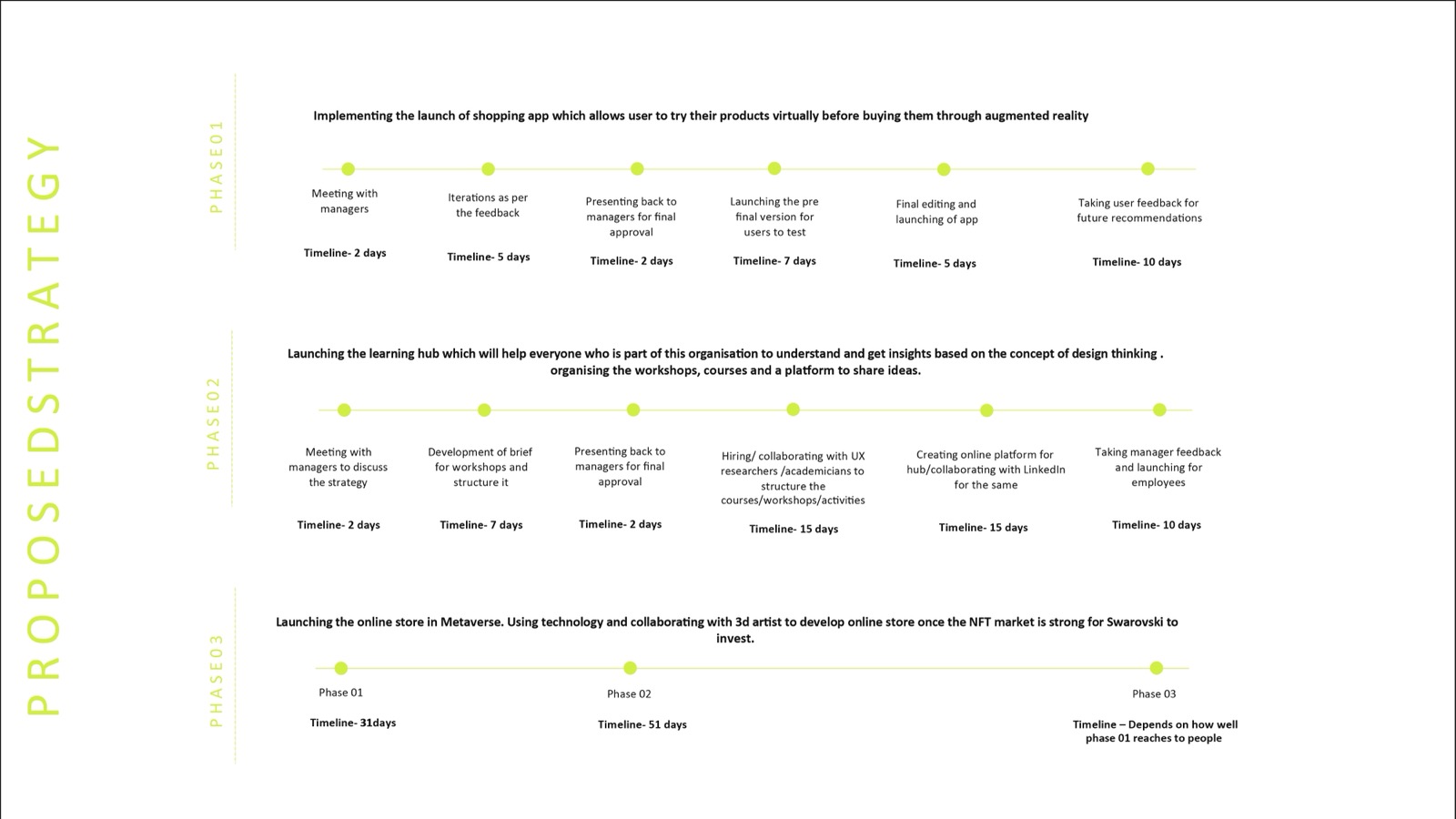
Proposed strategy
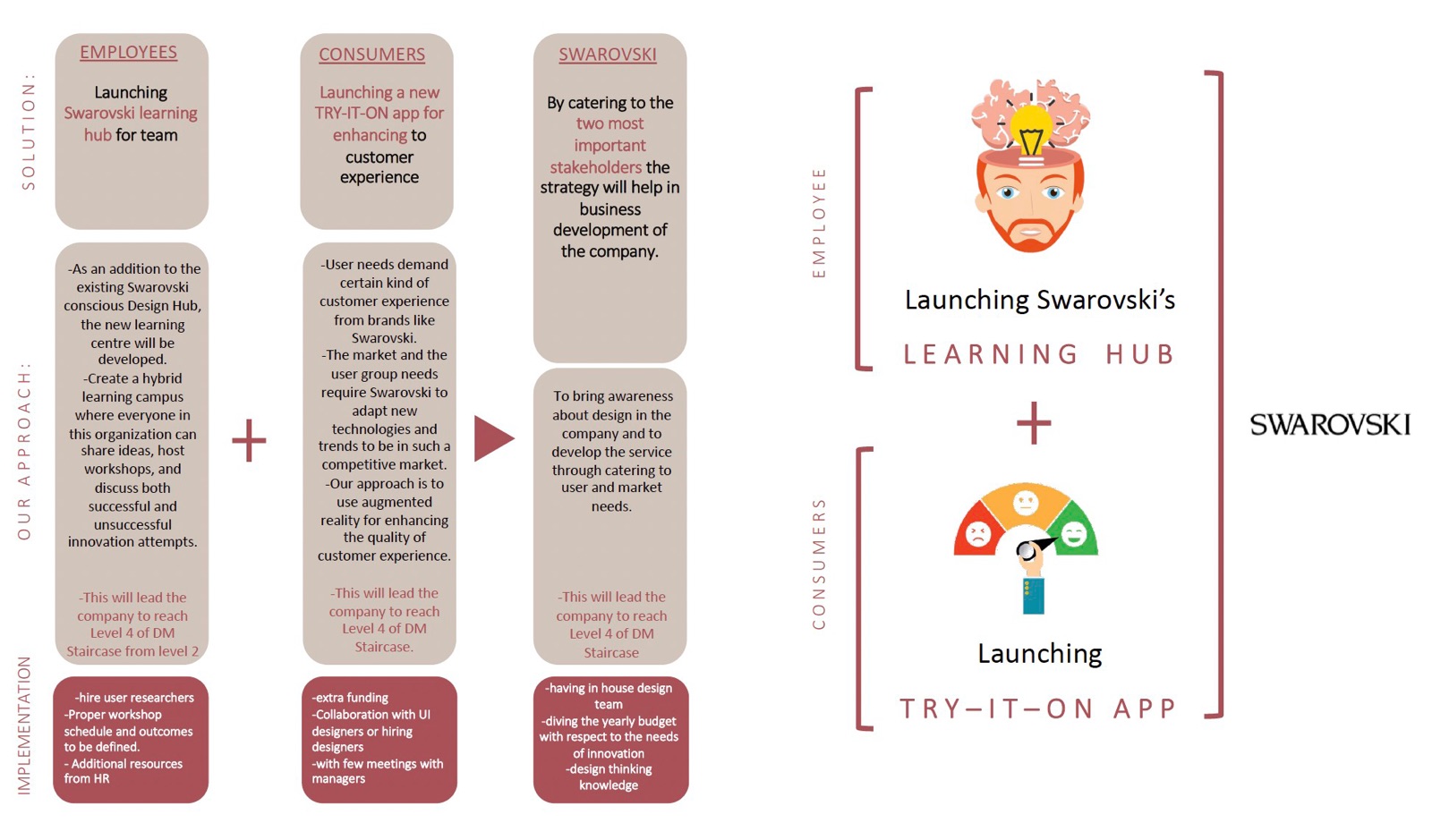
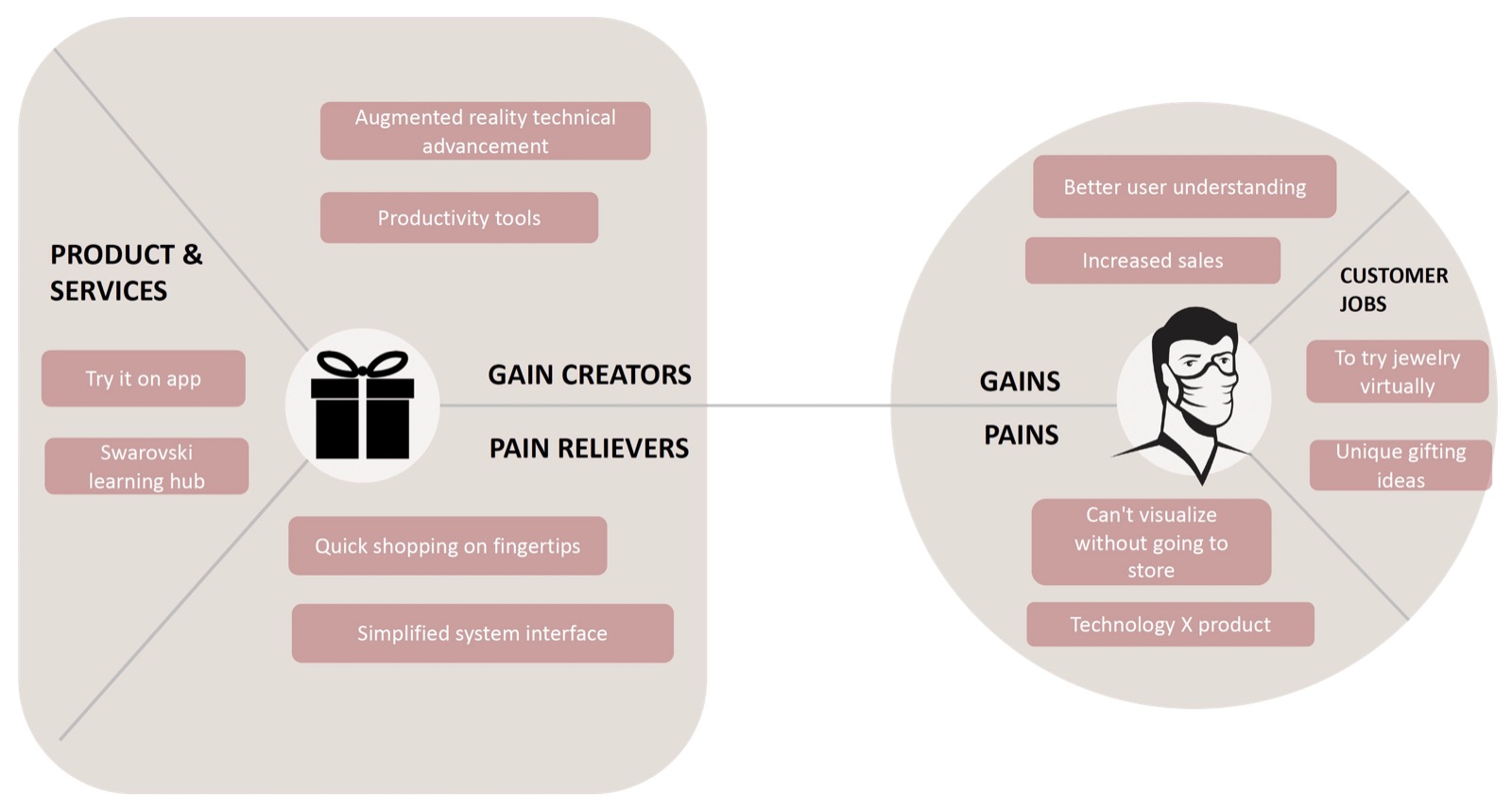
A learning hub to build design awareness inside the company, and a try-it-on app to modernise the customer experience.
Design process
Augmented reality + a platform for buying NFTs
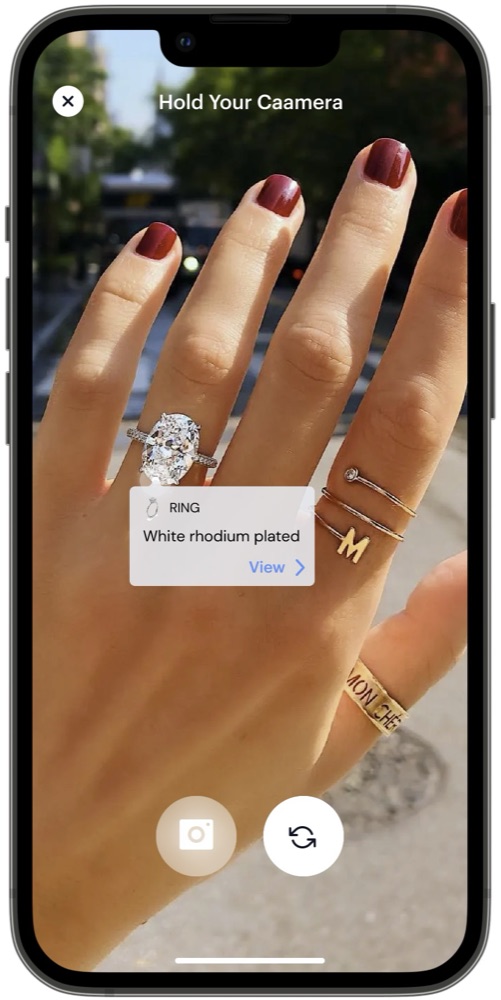
A Swarovski mobile app with an AR try-it-on feature and an NFT buying platform
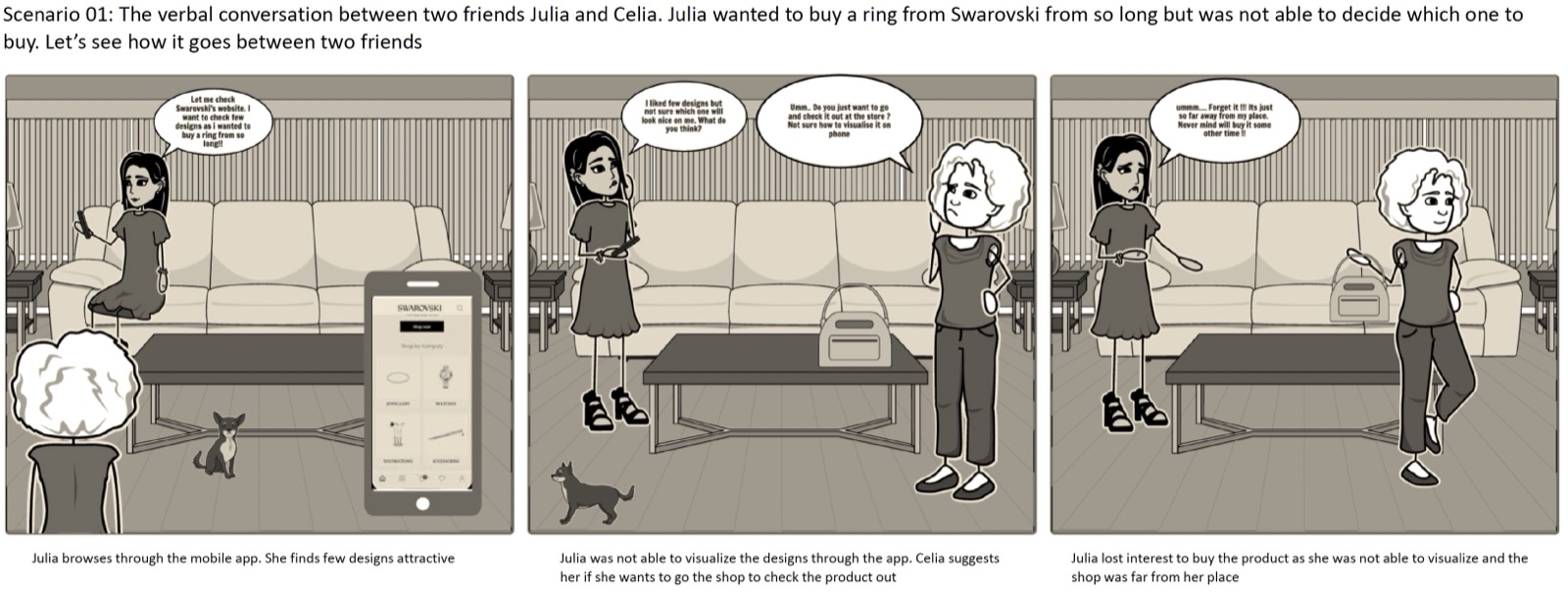
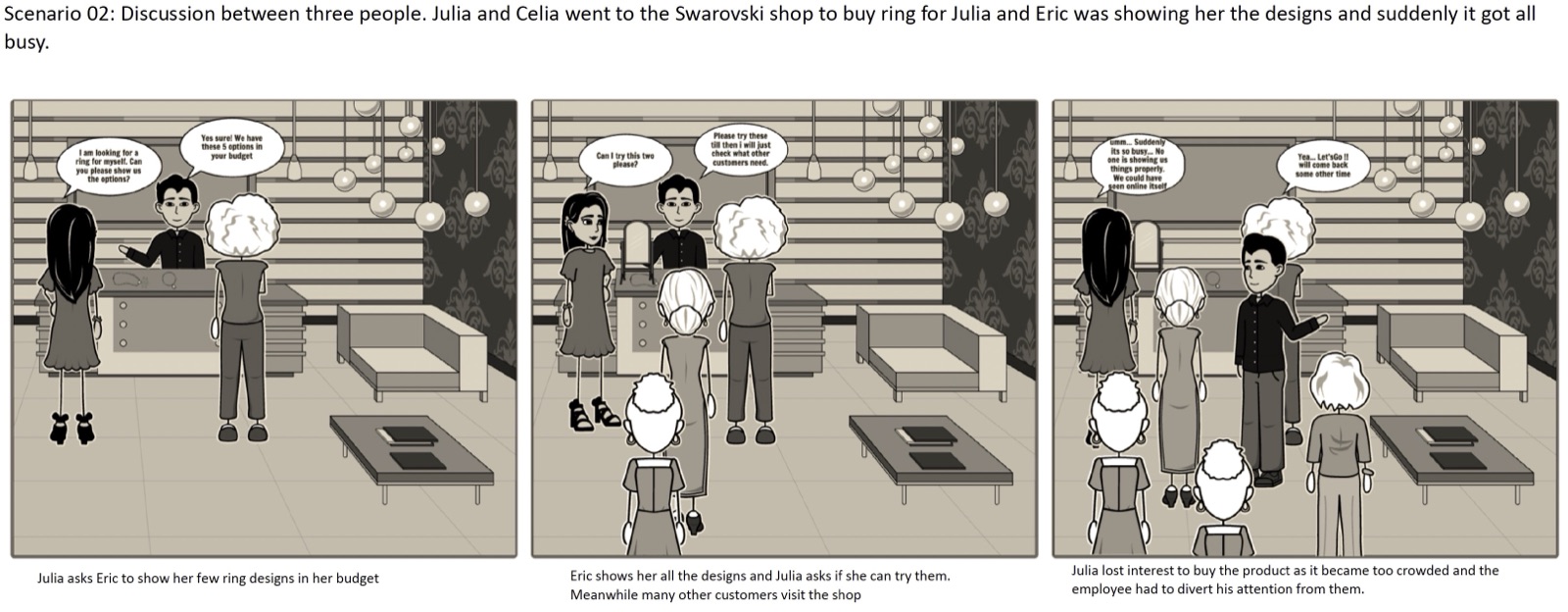
Storyboarding
Conceptualisation
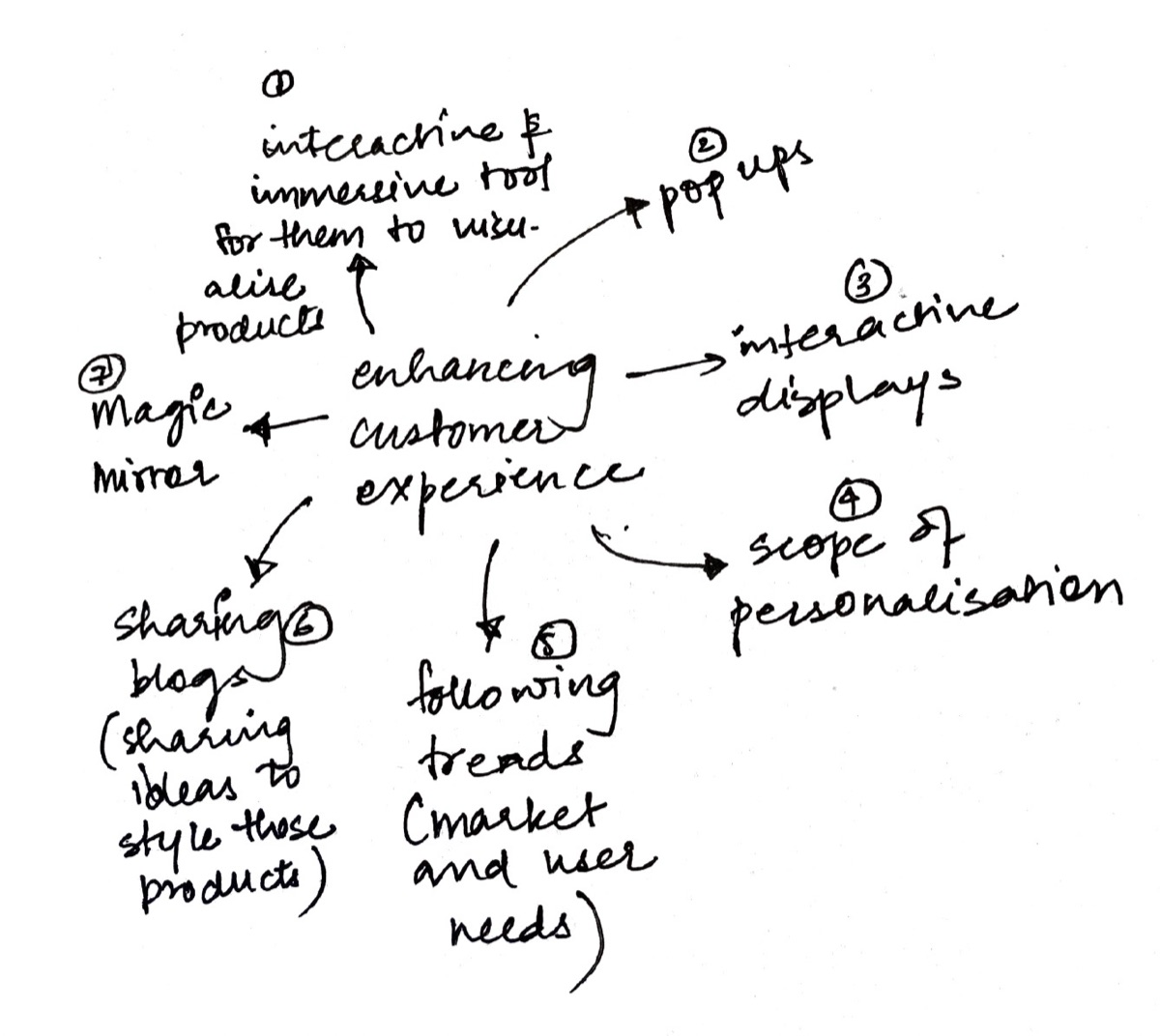
A kiosk that stands out from the crowd: an interface with product information and visualisation that also works as a promotional ad.
Personalise a piece by choosing colours, stones and more. Every combination is different, giving the brand data to develop designs.
Spread awareness of the brand's NFTs, which could later be used to buy products as well.
Concept 1
Magic mirror
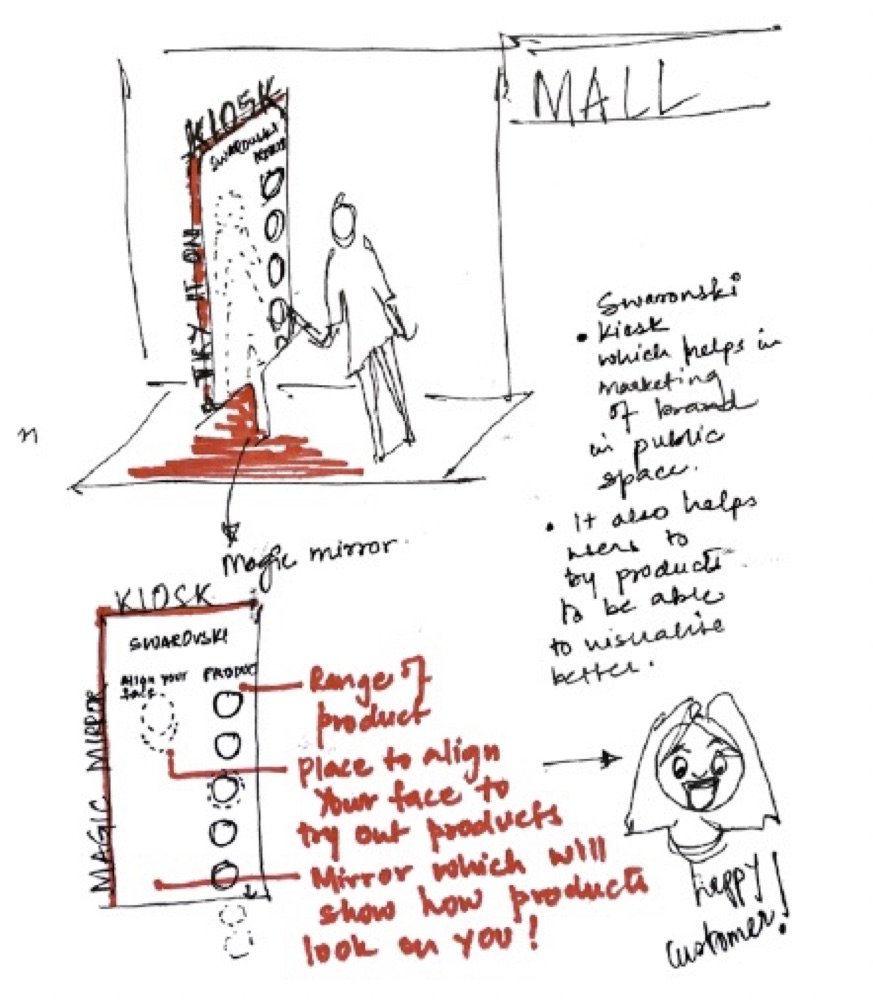
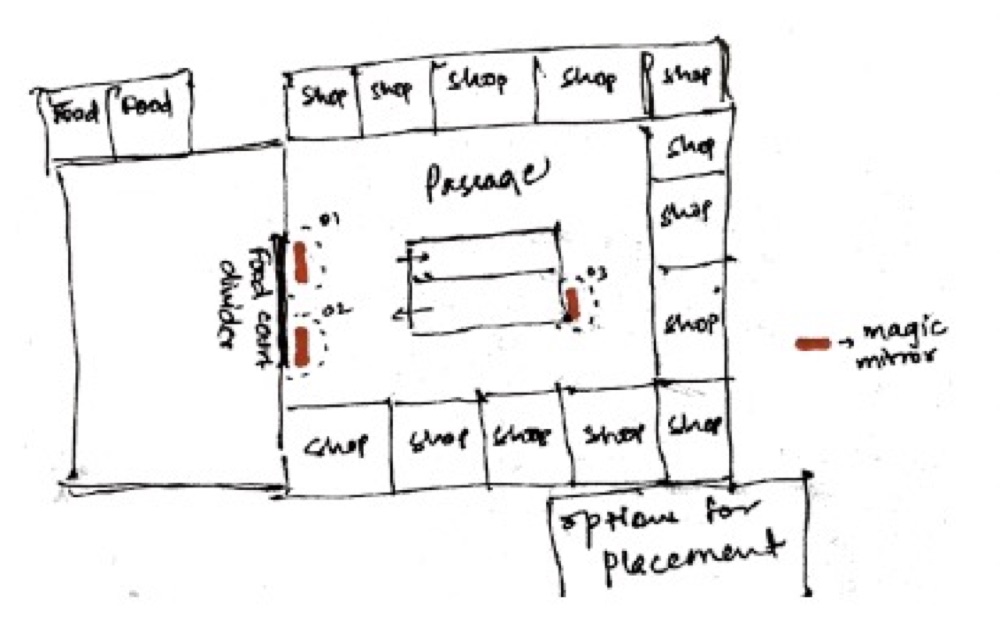
The magic mirror kiosk is installed in a public space in a mall. The screen draws people in to interact; it lets them try new products on themselves and guides them to download the app to buy.
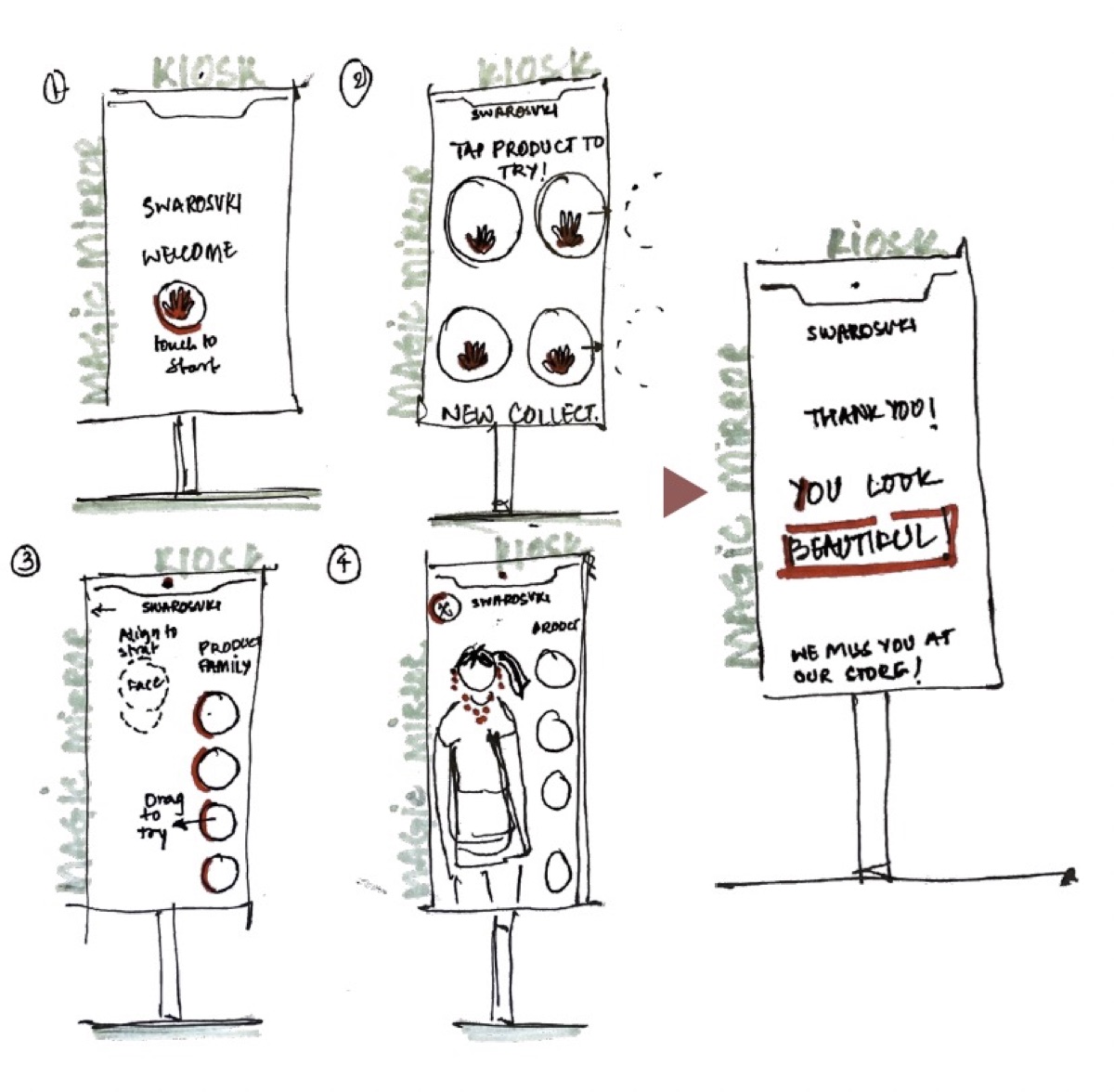
Informative enough for any interactive, attractive marketing or shopping interface. It can be developed into an interface that reflects the brand image to consumers and business stakeholders (B2B, B2C).
Concept 2
Customisation booth
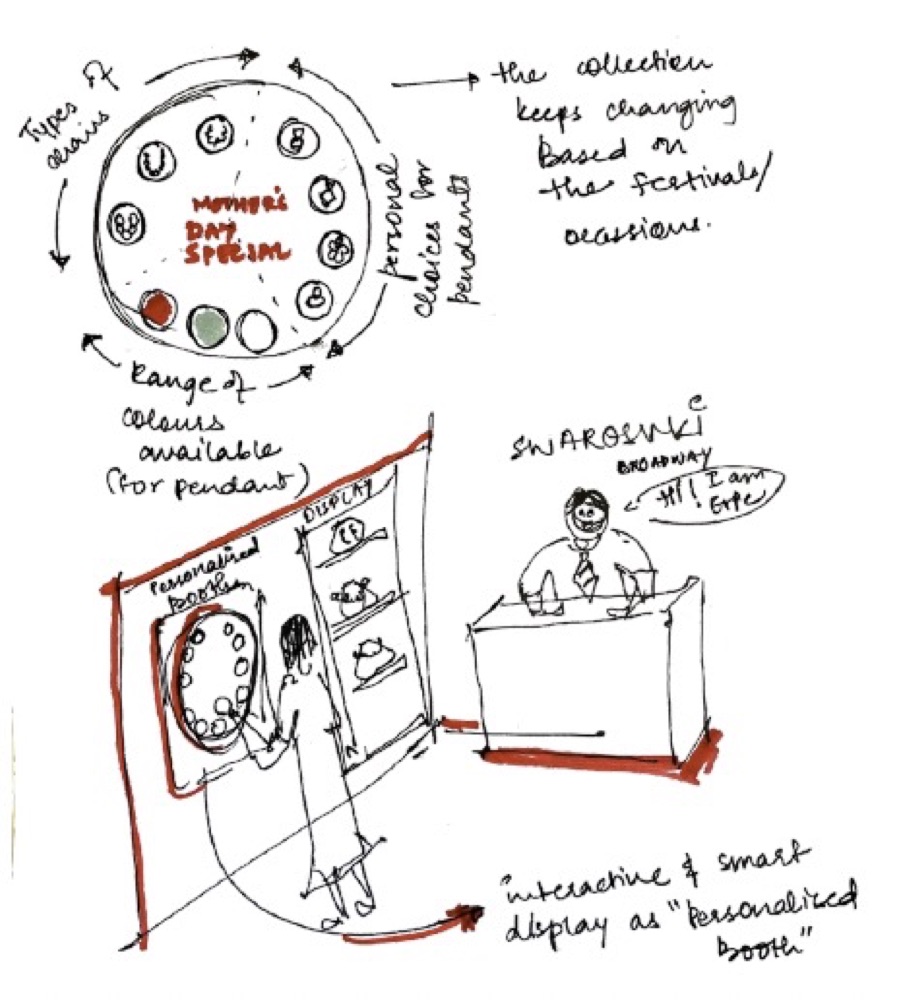
Installed in store, the booth carries new collections for festivals and occasions: 3–4 pendant options, 3–4 colours and a range of chains. “Make it the way you like.”
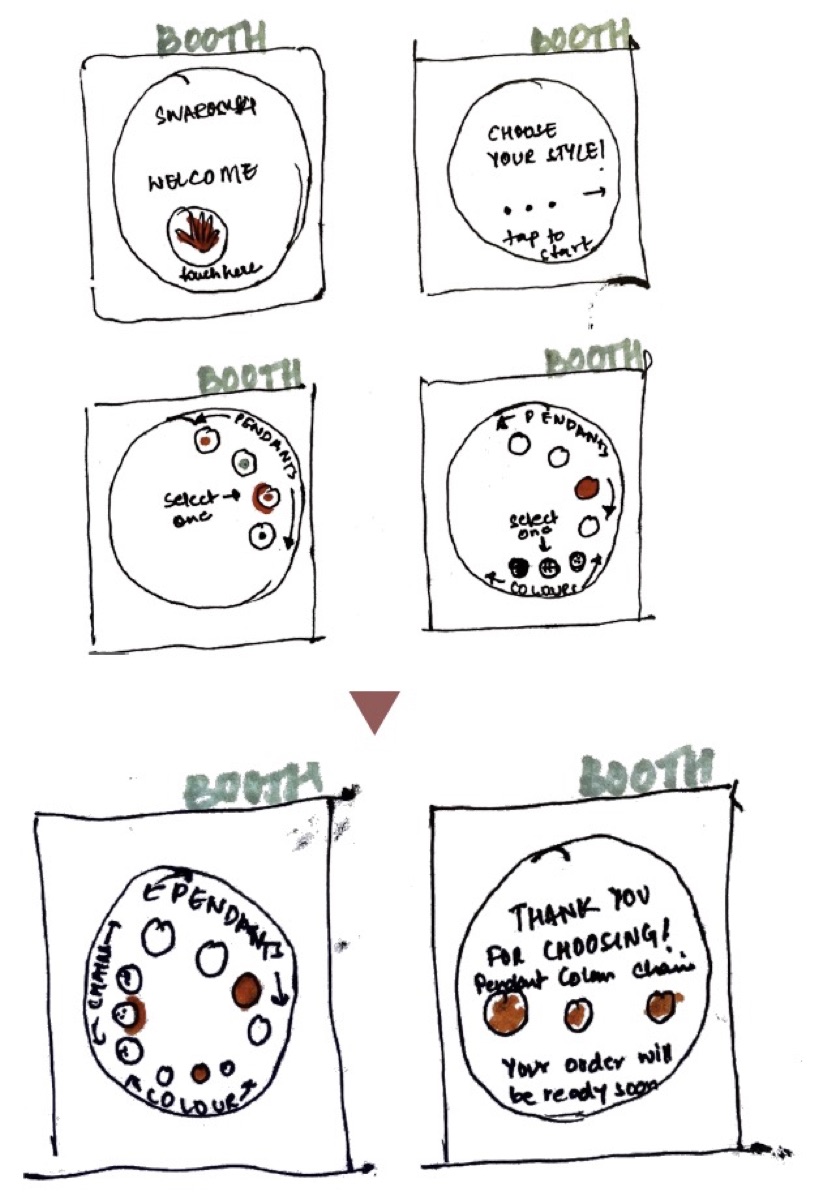
Interactive, and it lets designers create a collection on a system design where every piece is adjustable and grows with users' changing needs.
Concept 3
NFT transaction
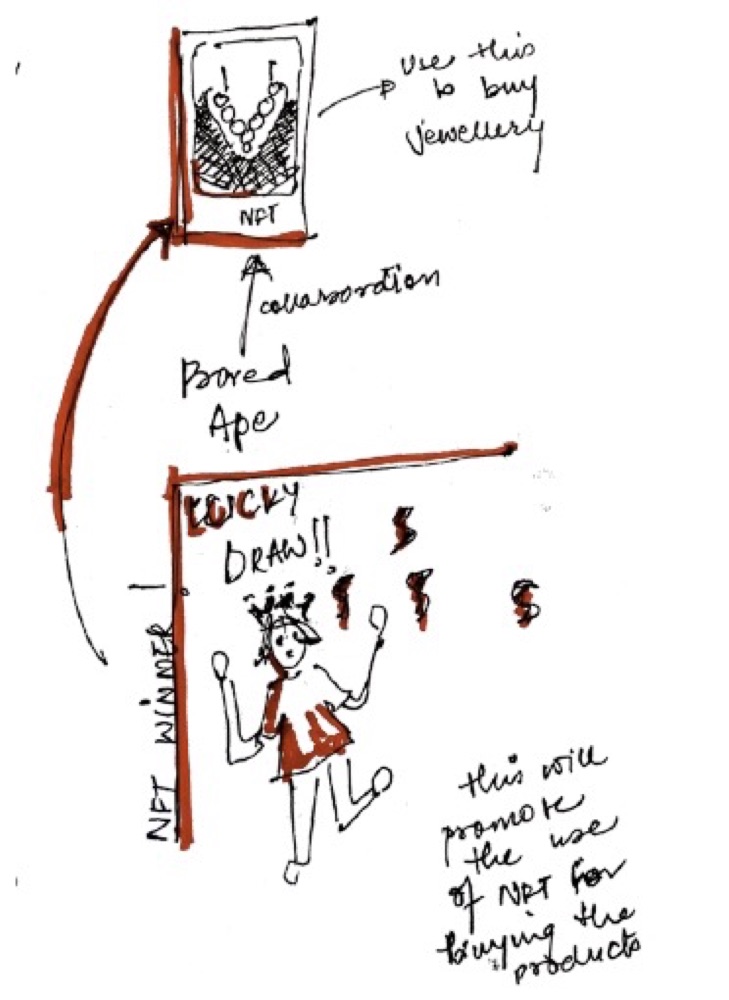
Attract customers to NFTs by randomly announcing winners and giving free NFTs as a promotional event. Those tokens are later used to buy products and take part in events.
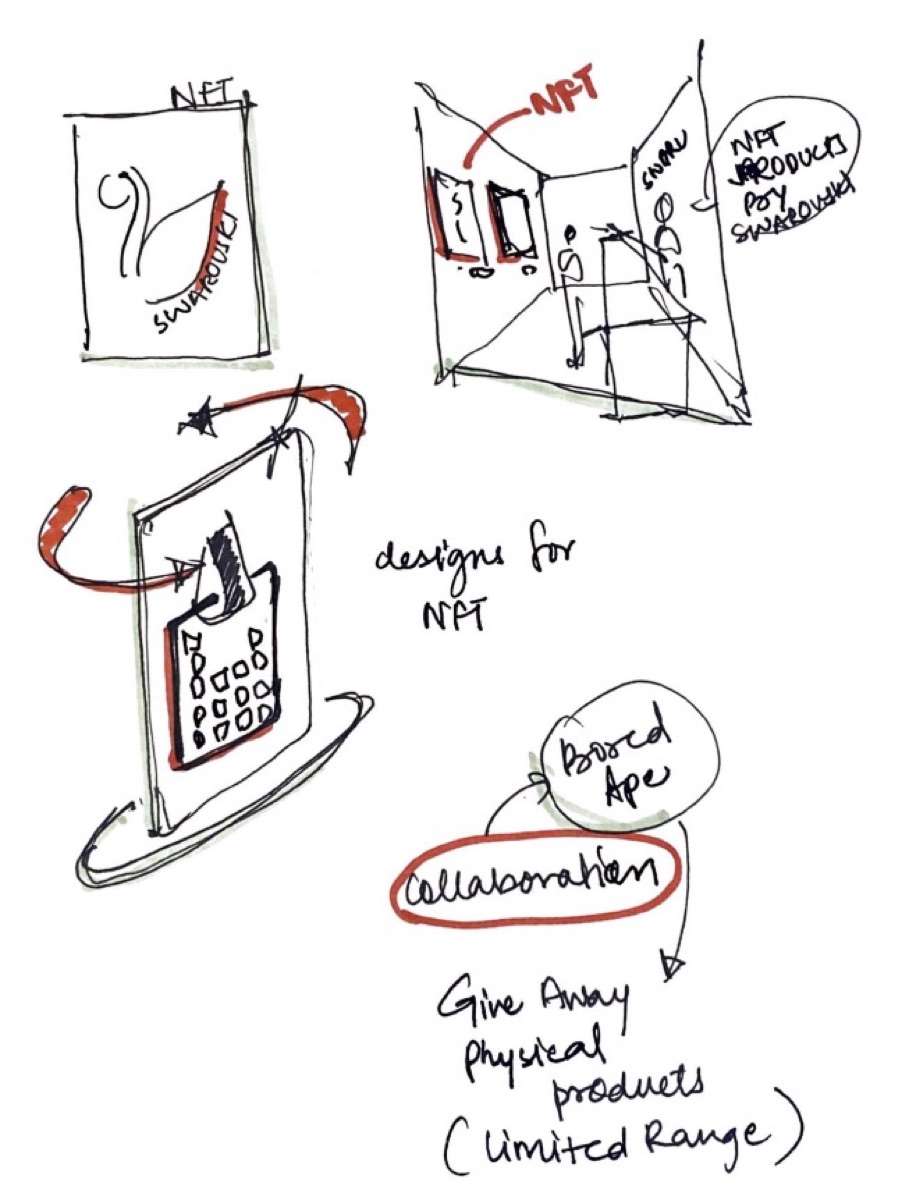
In Swarovski showrooms, as part of the product display.
Informative enough for any interactive, attractive marketing or shopping interface, and can be developed to reflect the brand image to consumers and business stakeholders (B2B, B2C).
Paper prototype & user testing
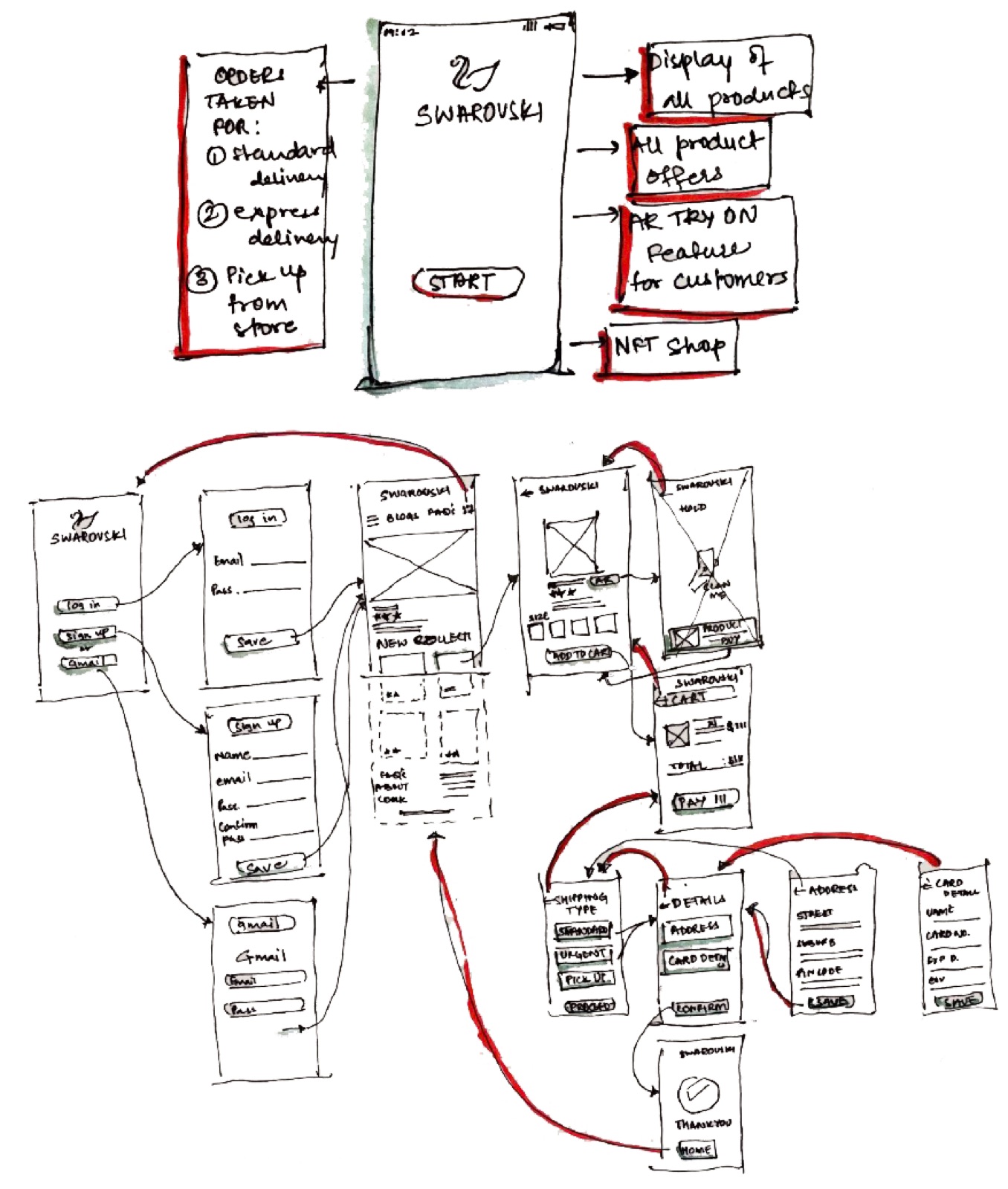
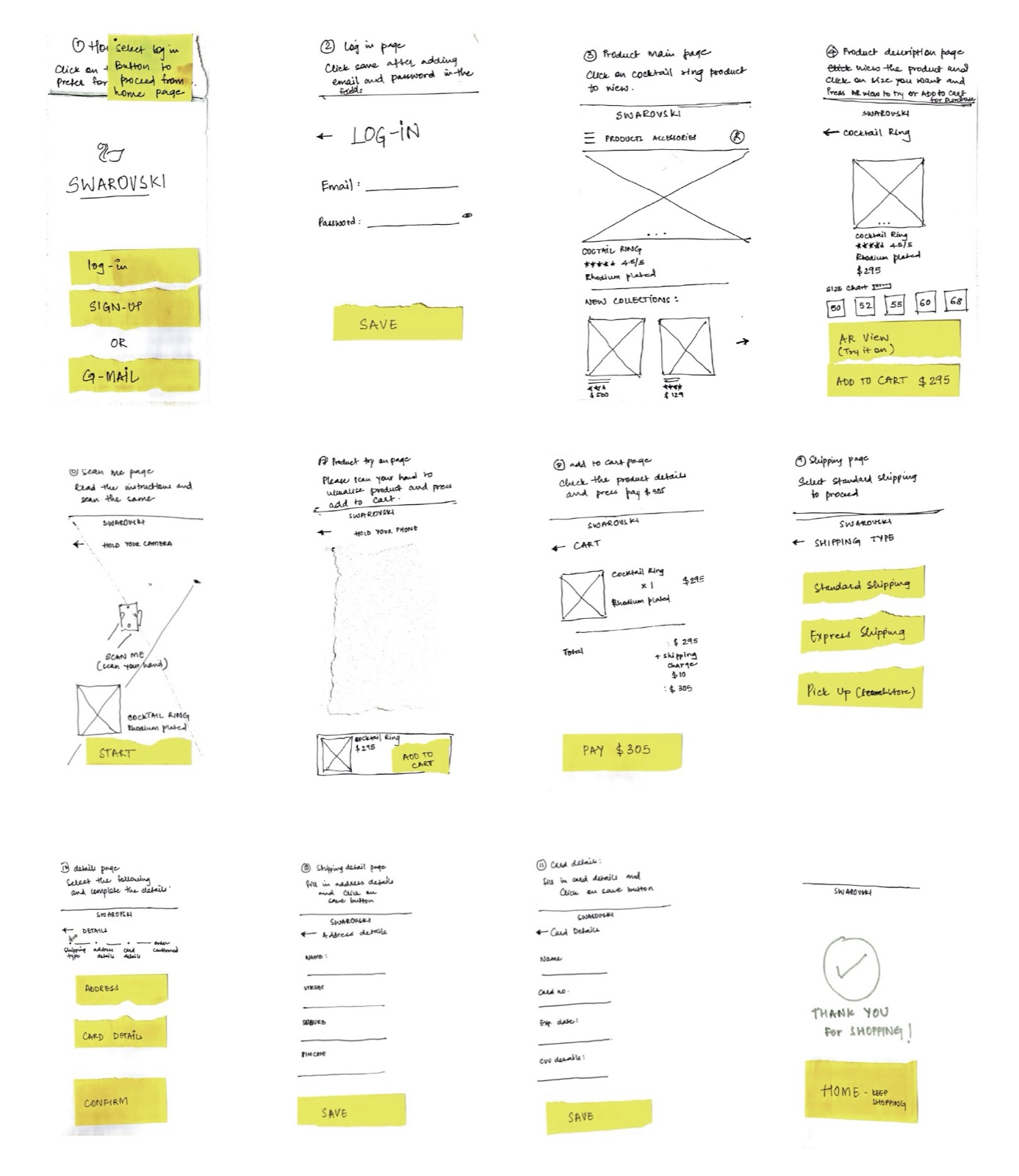
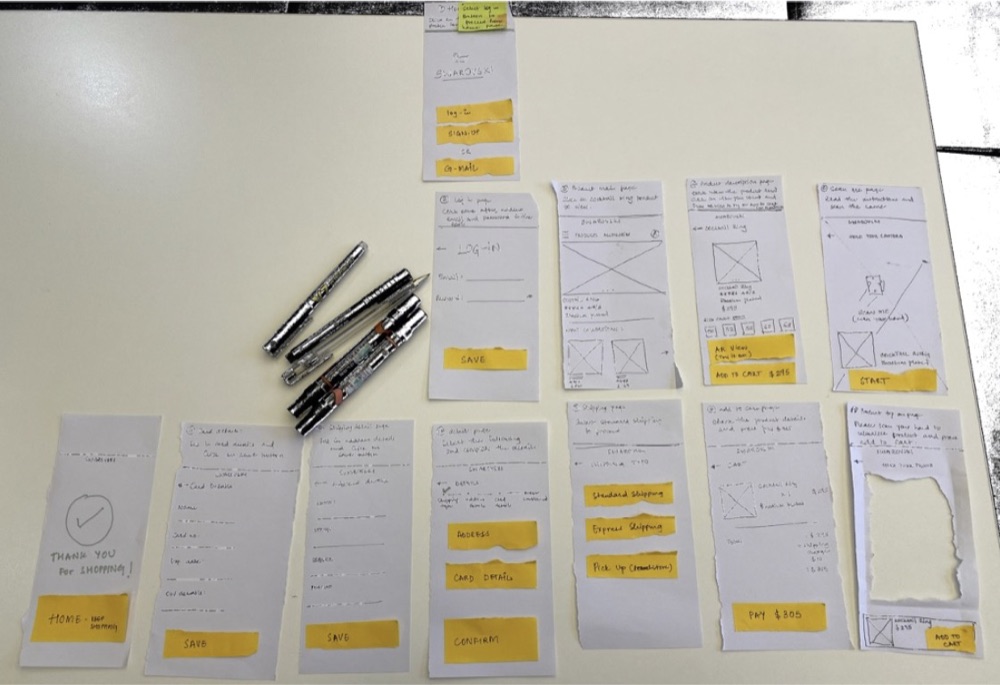
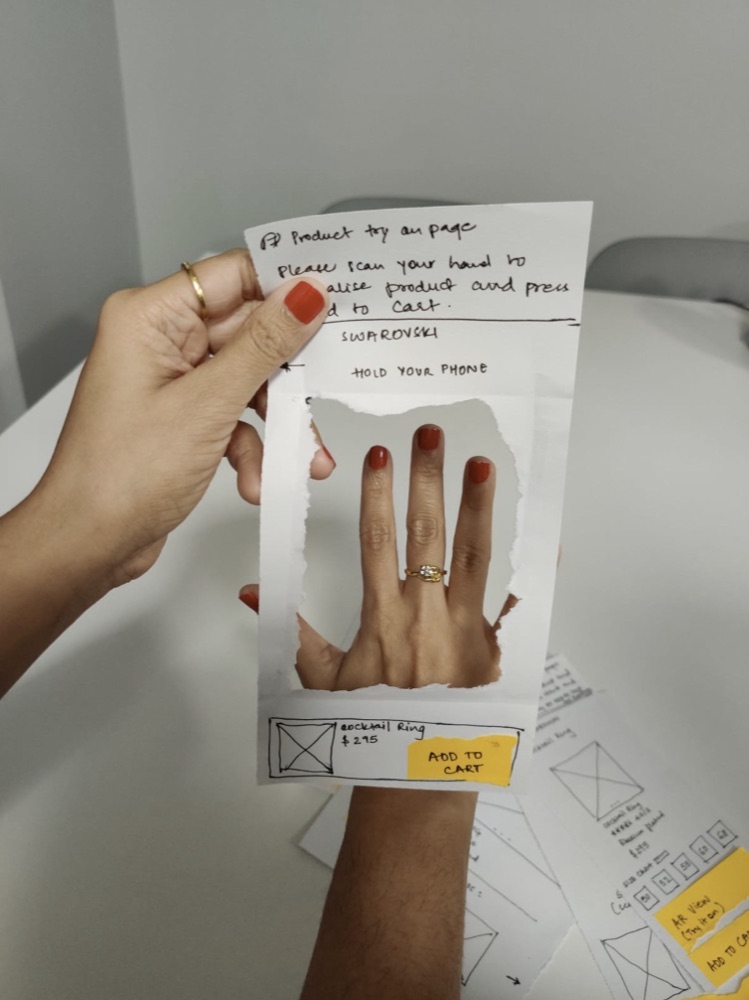

Snaps from the user-testing stage, where we tested the low-fidelity setup and mobile interface using the think-aloud method.
- The interfaces were a little complicated and needed simplifying.
- People were excited to learn how jewellery and NFTs can go hand in hand.
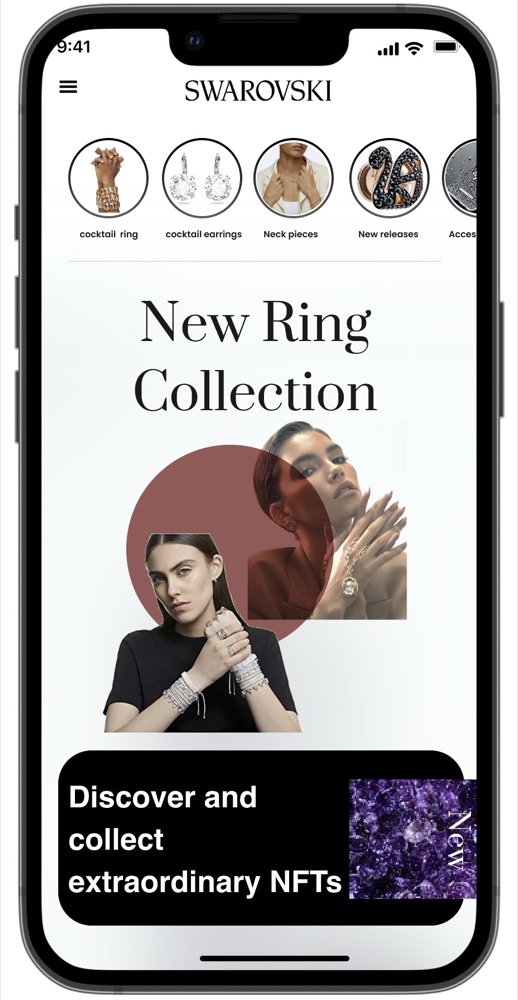
- Putting the NFT feature on the app's home page invited them to explore more of what Swarovski offers.
Final concept
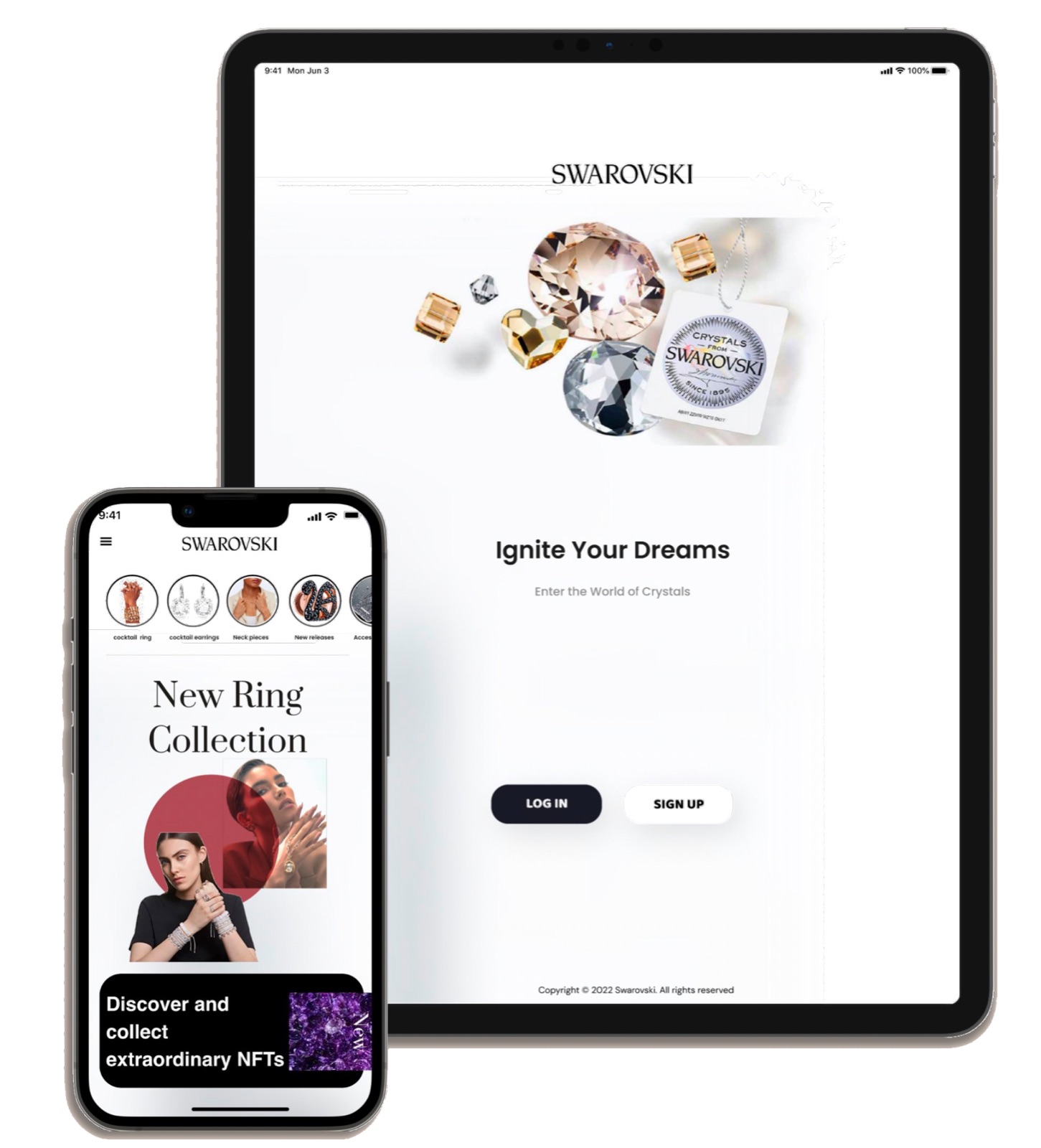
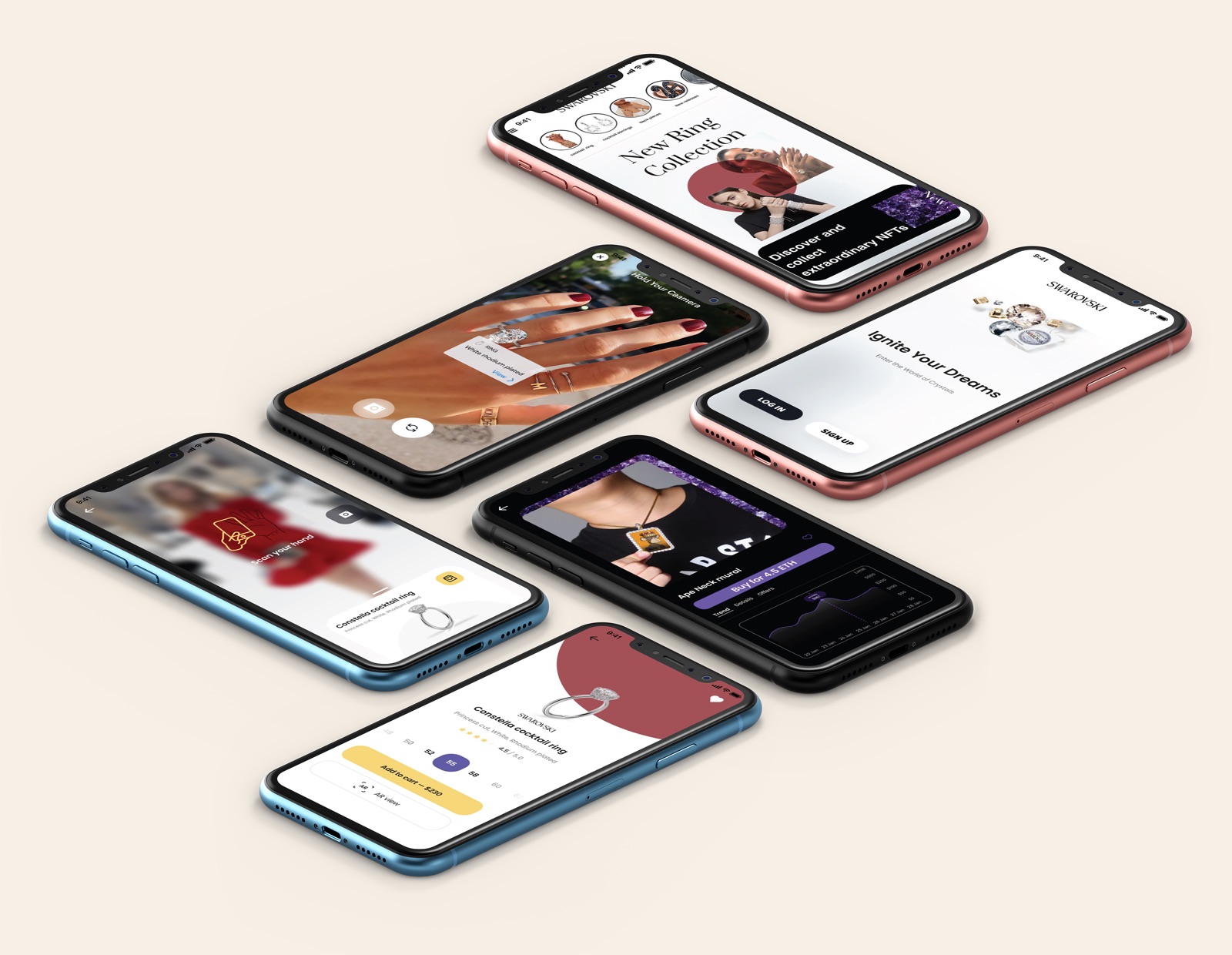
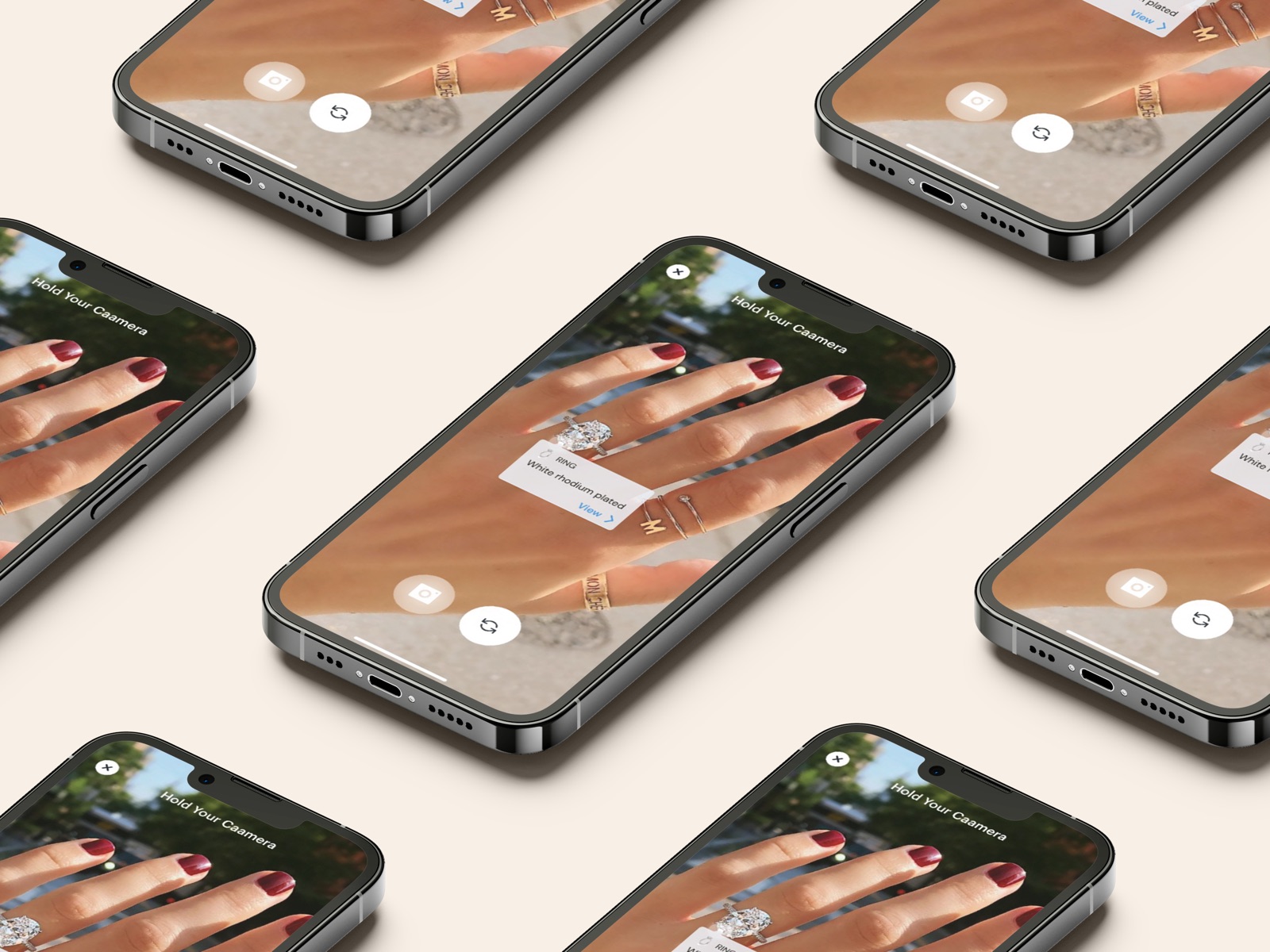
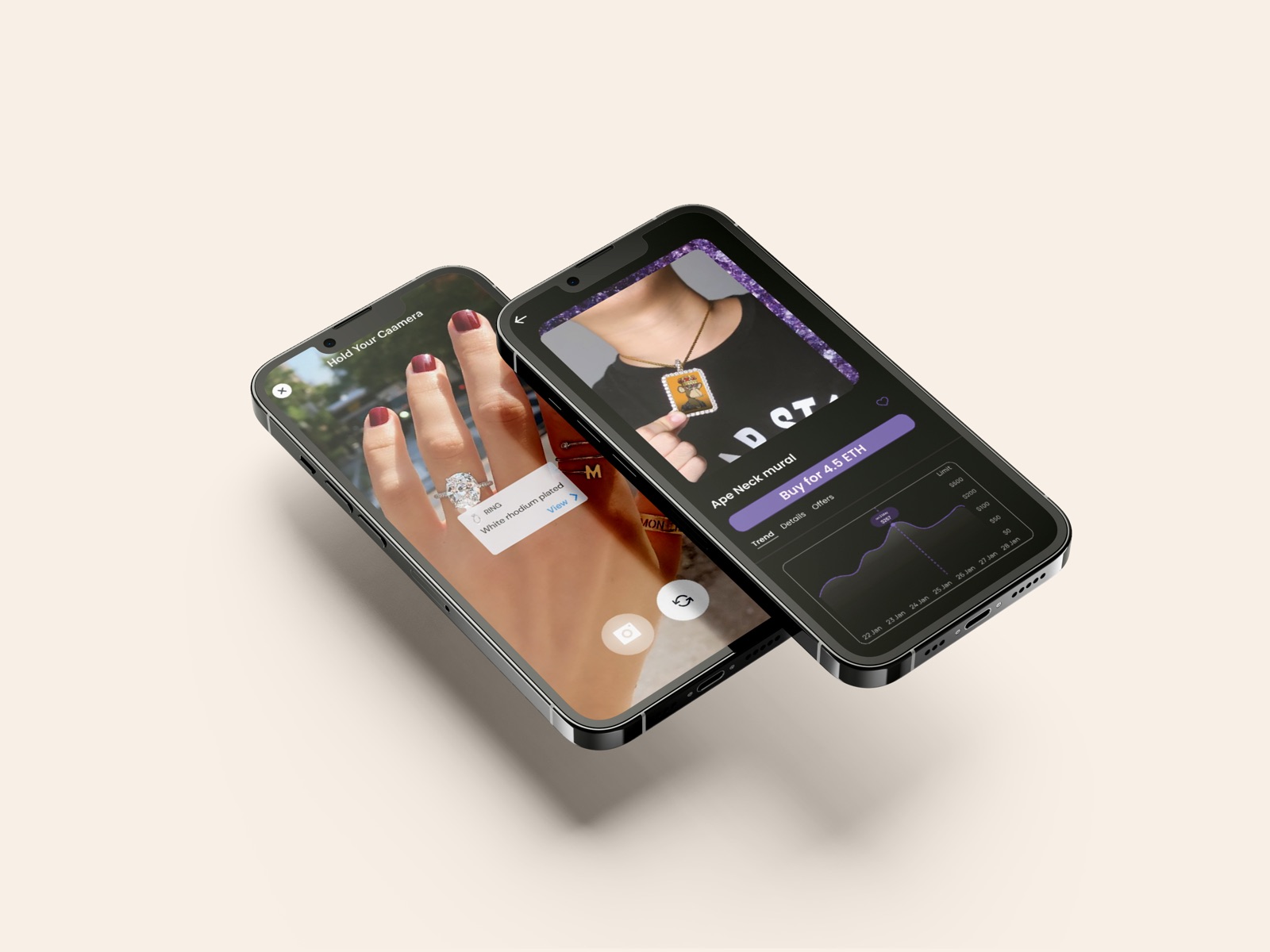
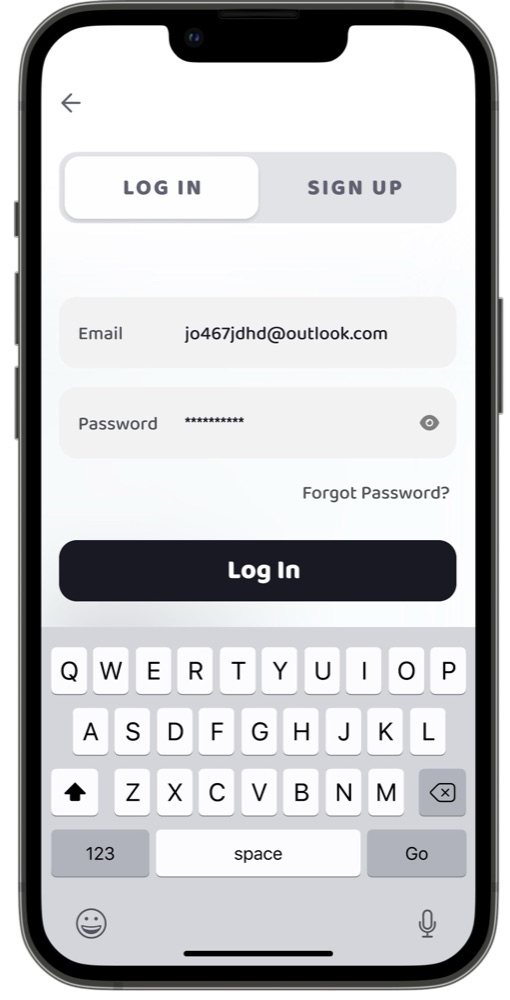
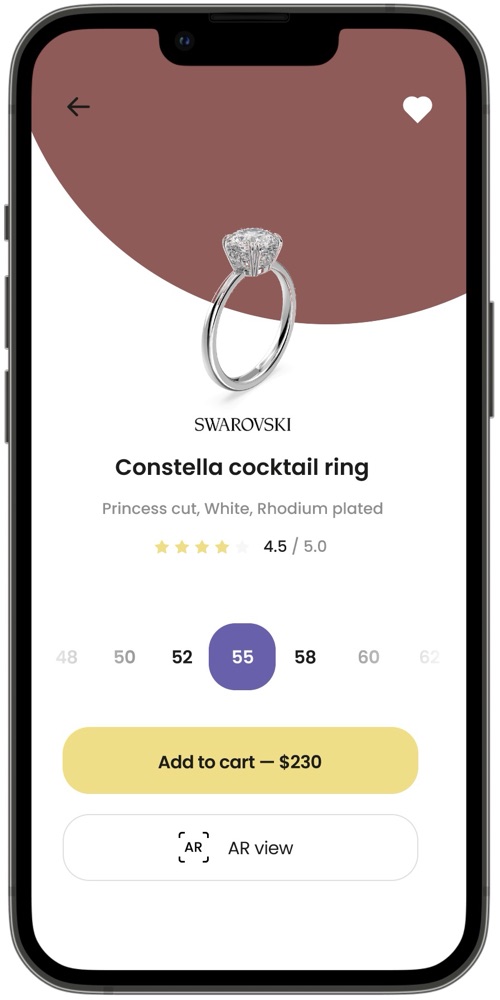
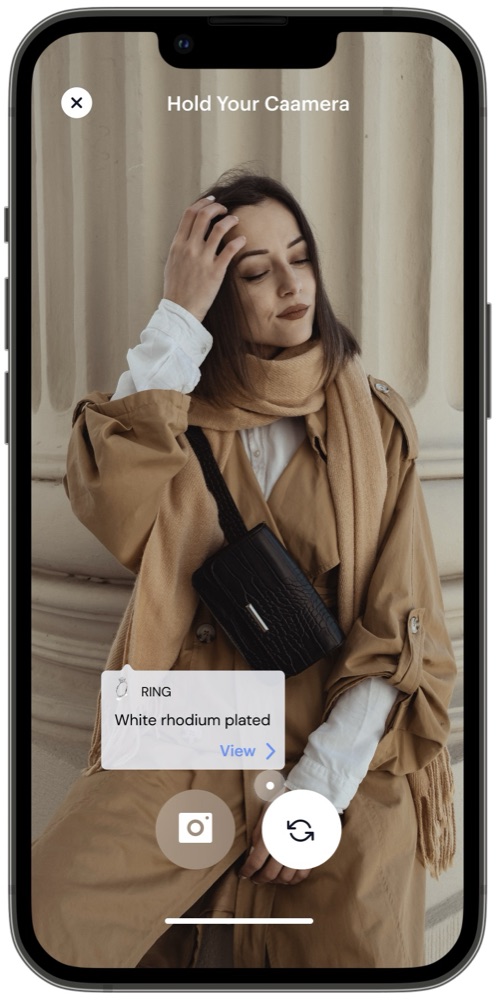
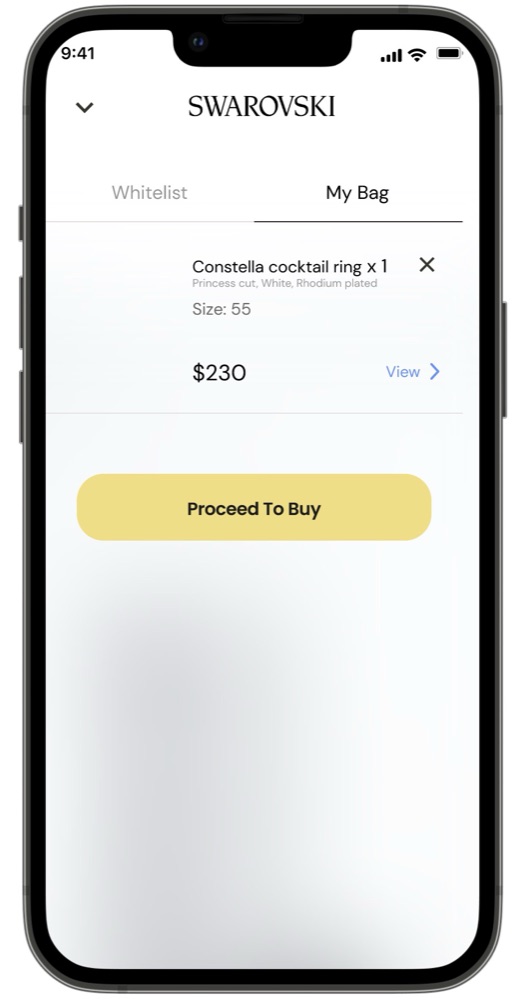
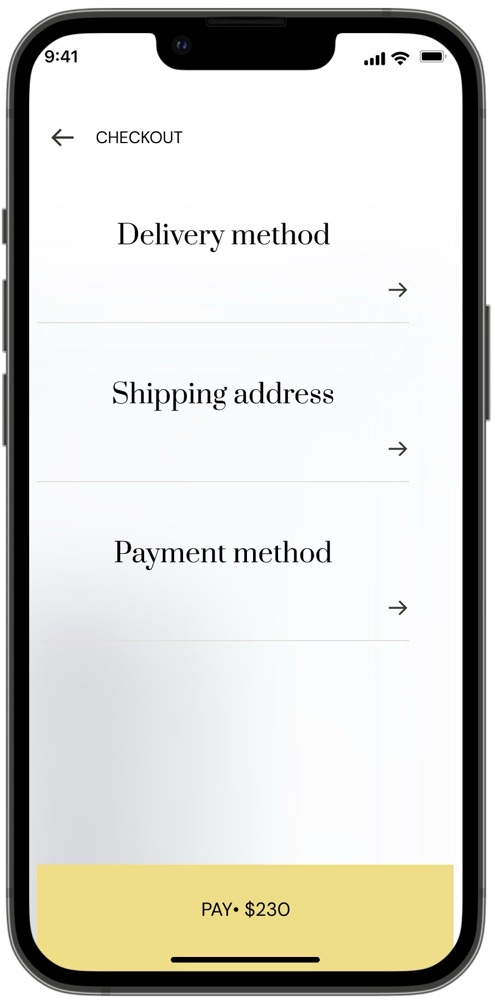
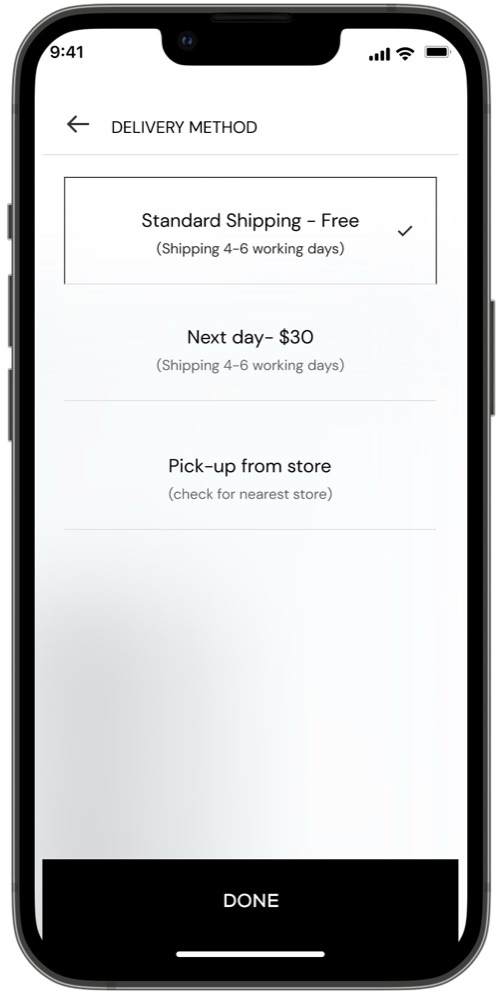
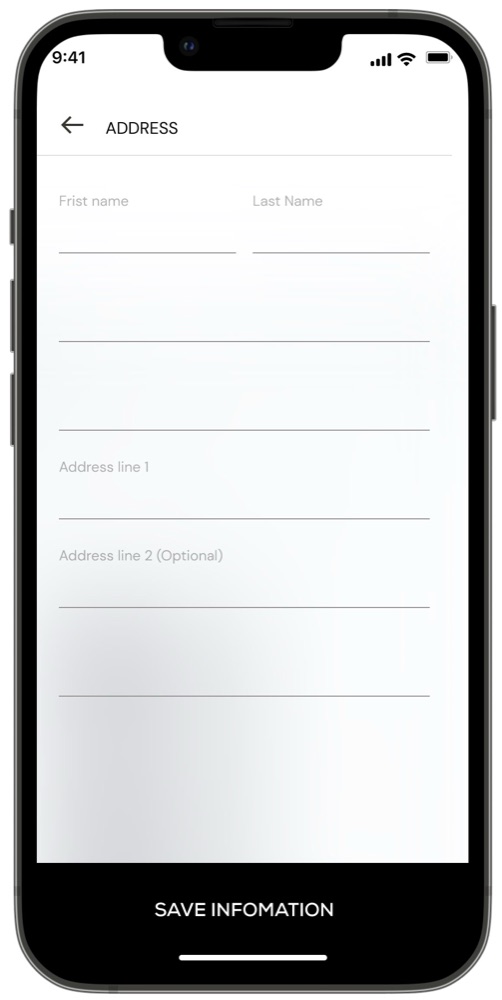
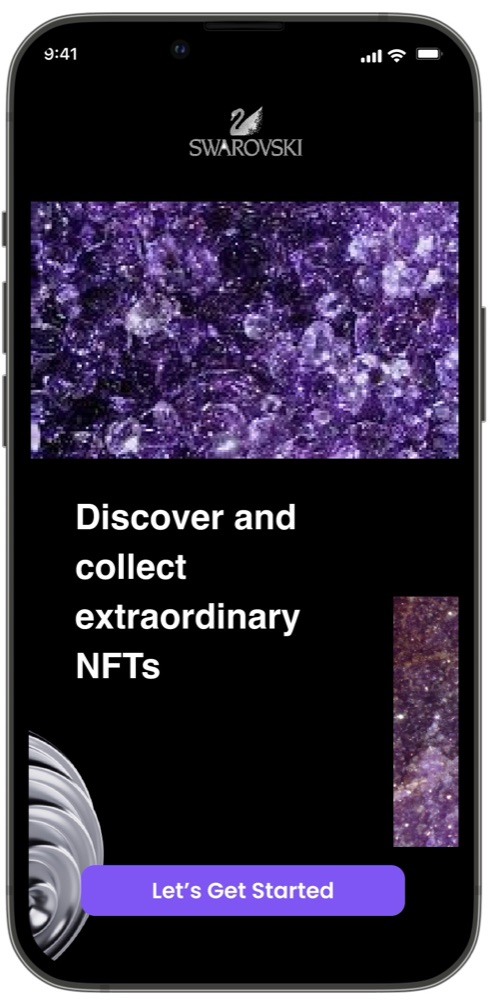
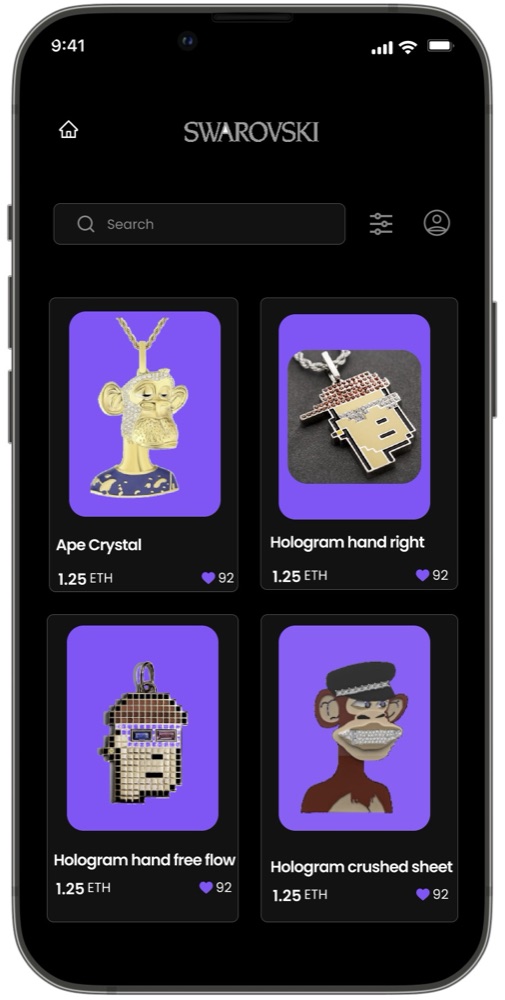
The proposed Swarovski app is designed for mobile and tablet. Users scan themselves to try products and visualise them better, then order for home delivery or pick-up at the nearest store. The app also tracks newly launched NFTs and lets users buy them, with Swarovski collaborating with collections like Bored Ape.
App screens

Value proposition
Evaluation & DVF
These processes lead to a more design-centric, user-focused approach to problem solving. A key outcome is a better customer experience, superior service and a more engaging shopping journey, which can improve cash flow and asset productivity.
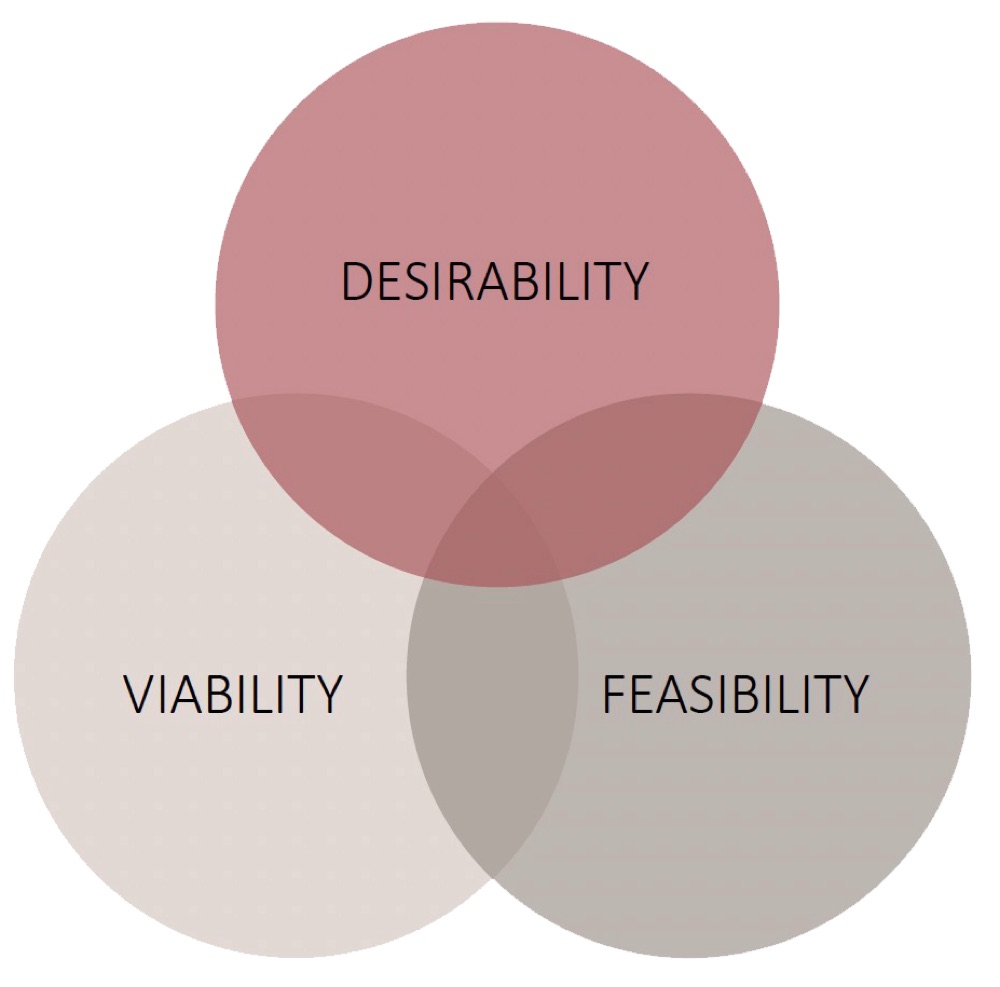
Going digital enhances customer engagement and the shopping experience, aligning with modern consumer expectations.
Digital initiatives support long-term brand growth by strengthening customer relationships and expanding market reach.
Advances in AR and NFTs make it possible to implement solutions that enhance both customer interaction and brand value.
Strategic opportunities
Augmented reality
Increases product discovery, engagement and purchase intent in the short term, while strengthening brand equity in the long term.
NFT integration
Collaborating with crypto communities such as Bored Ape Yacht Club, CryptoPunks and Chimpers could bring Swarovski into digital collectibles, and, over time, its own digital ecosystem.
Gen-Z market growth
According to Bain & Company, Gen-Z is expected to account for 40% of the global luxury market by 2035. To stay competitive, Swarovski must adapt to a digital-first lifestyle (BoF Studio, 2022).
Why this will work
Design maturity
Design thinking enhances human-centred solutions through an agile framework: observing, analysing, questioning and experimenting to open up options that structure the system or product and lift brand value.
The strategy serves two stakeholders: it brings design thinking into the team, and gives customers an AR experience that sparks curiosity and converts, building brand equity and the current design practice.
After implementation, the company reaches Level 4 of the design management staircase.
Innovation
- Elevates the customer service experience for online consumers through technology.
- Helps the brand compete in the global fashion market.
- Acts as a channel to market and build a strong consumer base.
- Organises the design practice and structures the organisation with proper methodology.
- In a Hitachi Consulting survey of 2,000 UK consumers, 69% of 24–35-year-olds said they'd be more likely to shop with a retailer using innovative in-store technology.