Motion graphic animation · University project · 2021
Ferris Bueller
A collage-style motion piece paying tribute to Ferris Bueller's Day Off: kinetic typography, rotoscoping and 80s textures built around the film's most famous fourth-wall break.
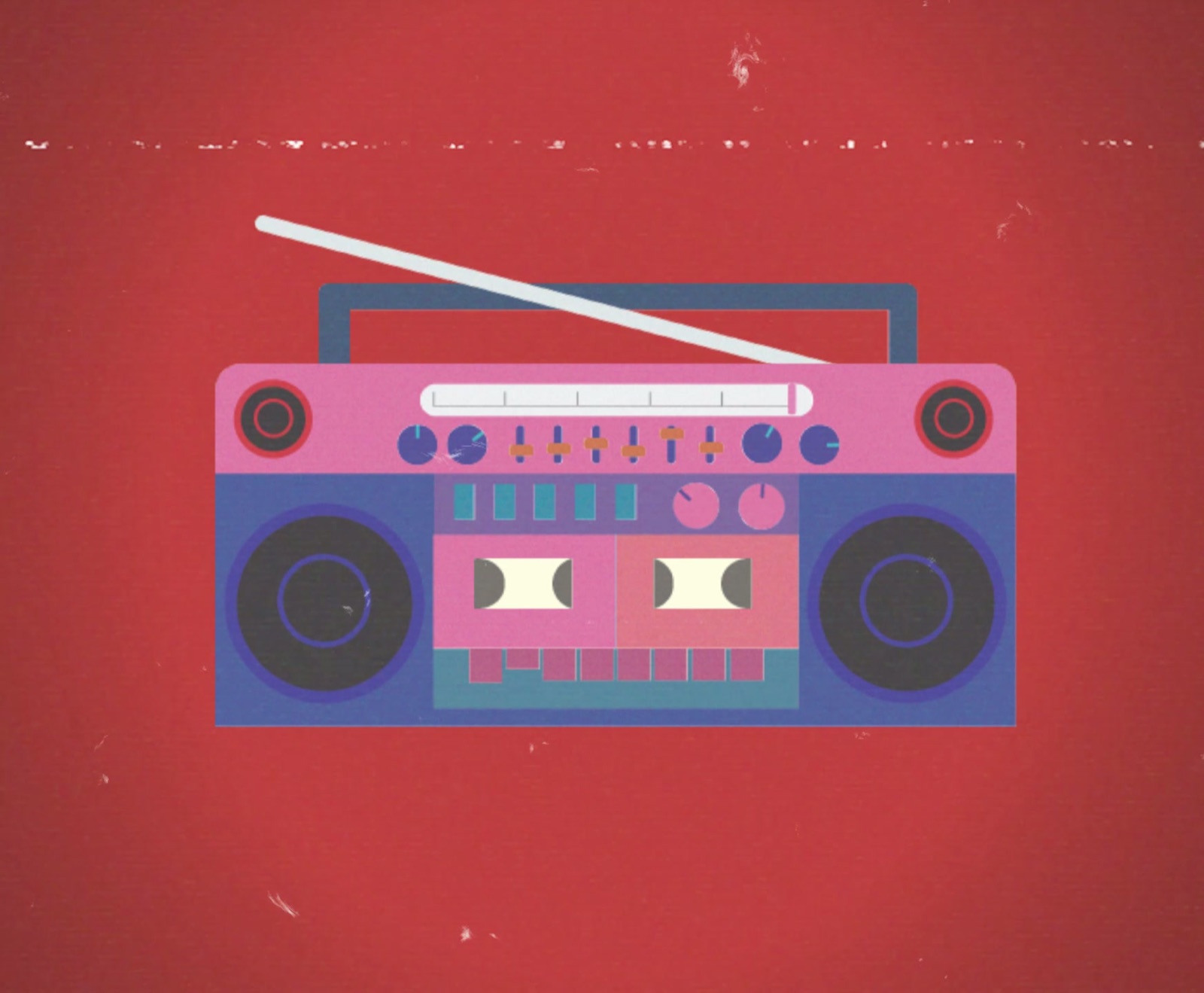
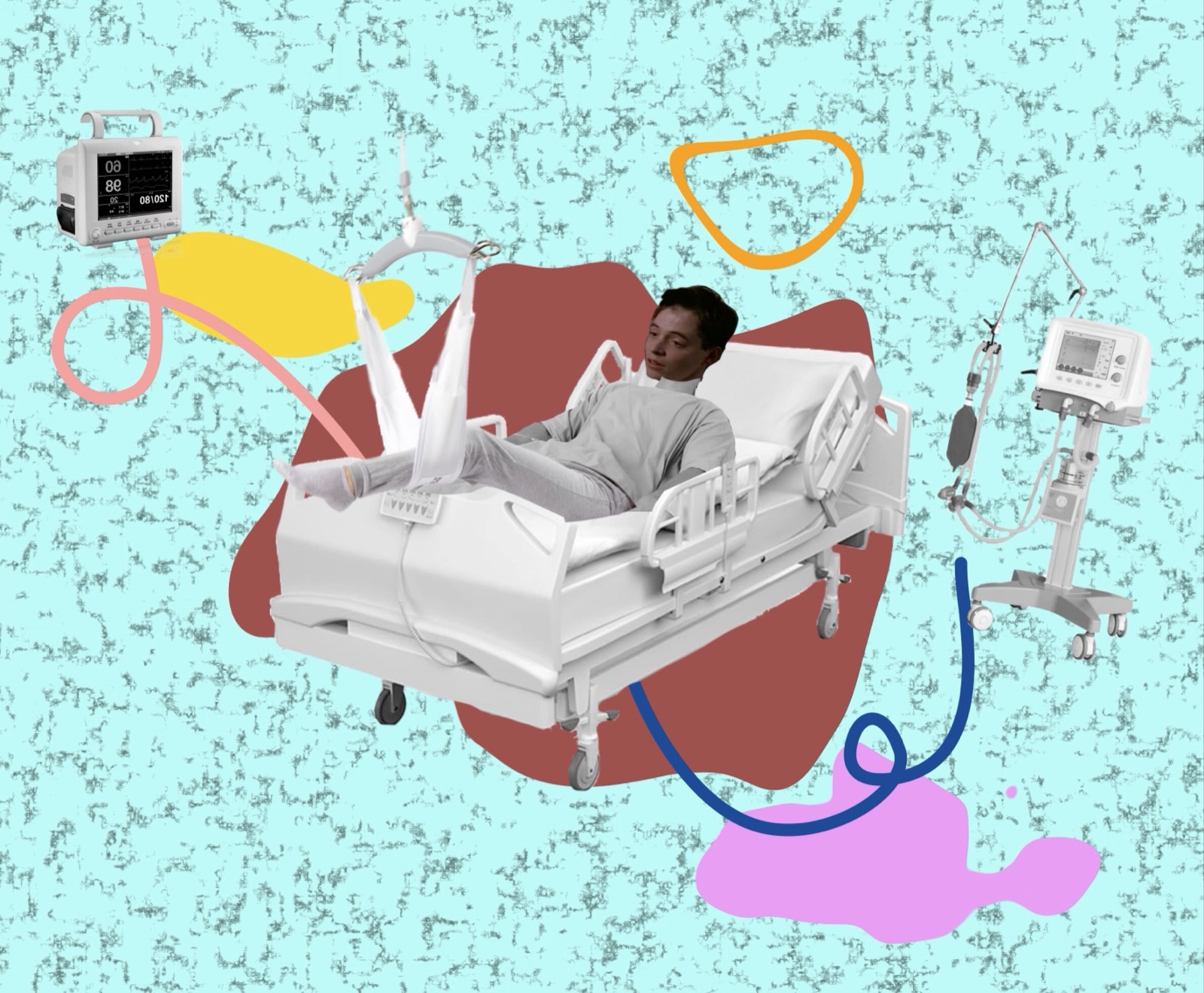
A tribute to Ferris Bueller's Day Off, focused on the memorable scene where Ferris cleverly fakes being ill.
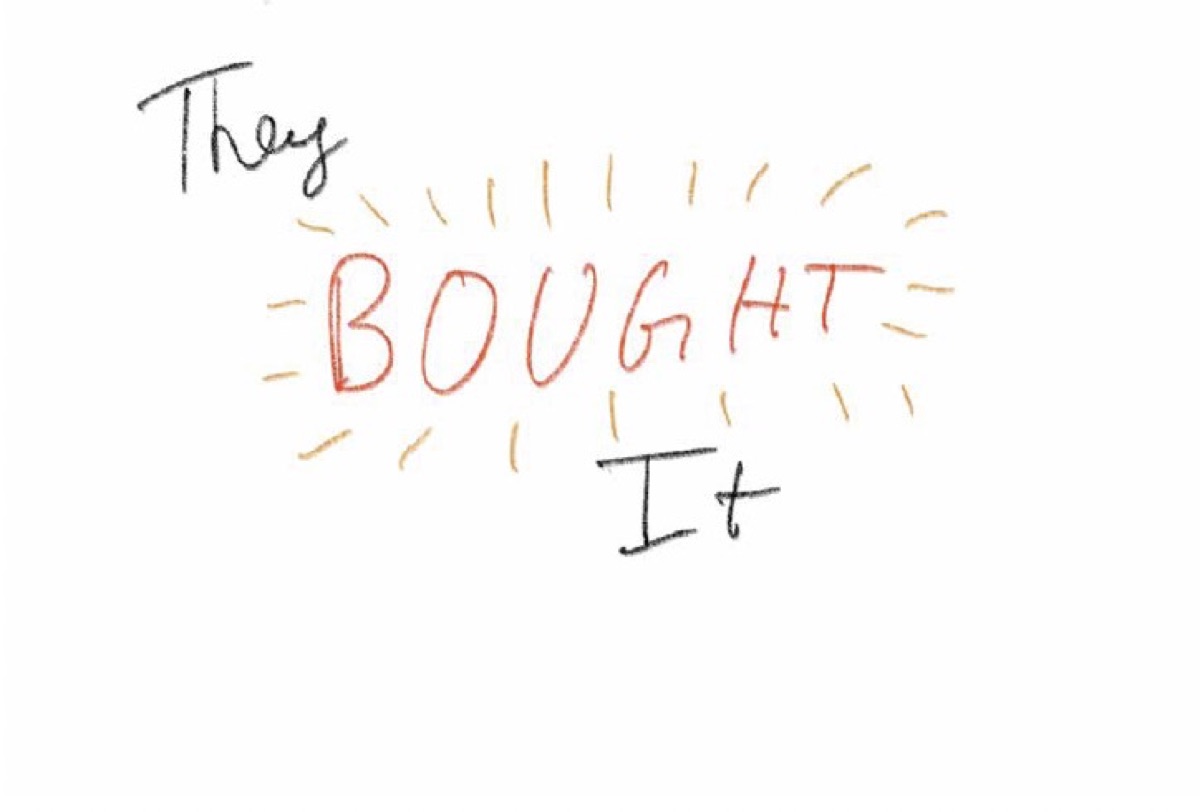
Use motion graphics, kinetic typography and collage animation to capture the essence of this iconic moment and its characters' distinctive look, exploring how motion and type can tell a story.
A dynamic short-form motion piece combining kinetic typography, collage elements and frame-by-frame animation that brings the energy of the original scene into a new visual form.
The story retold
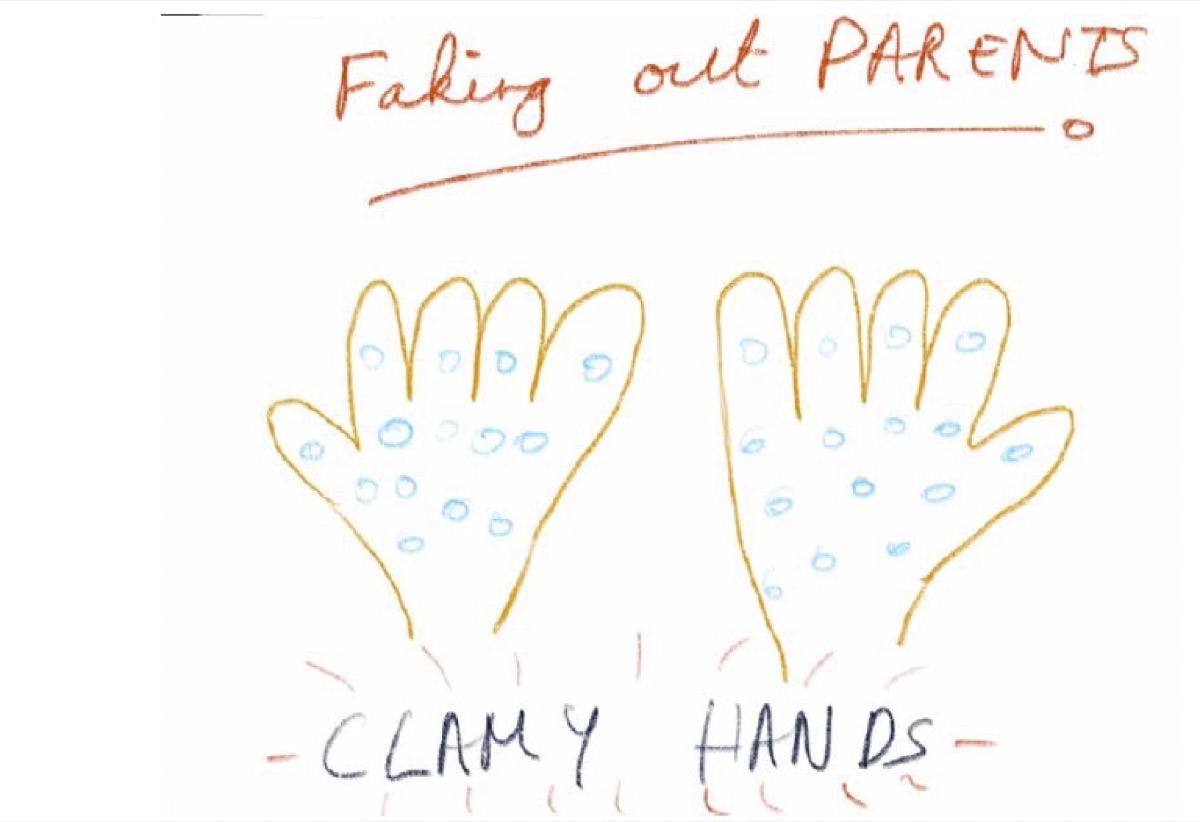
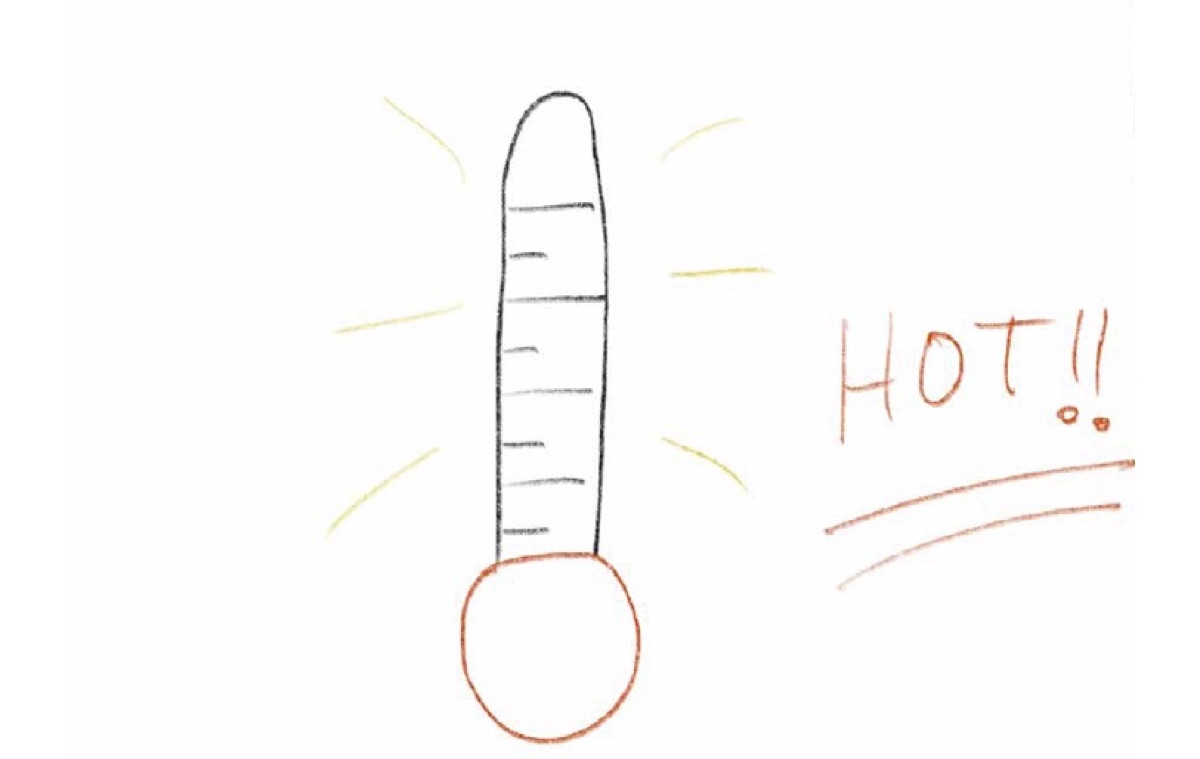
The animation follows the 1986 John Hughes film Ferris Bueller's Day Off. It's an abstract take on the movie, focused on the first major monologue: the scene where Ferris tricks his parents into believing he's sick.
That monologue is one of cinema's most celebrated fourth-wall breaks. It allows a rich portrait of the character's iconic look through motion graphics, kinetic typography and collage, building Ferris's world from the ground up.
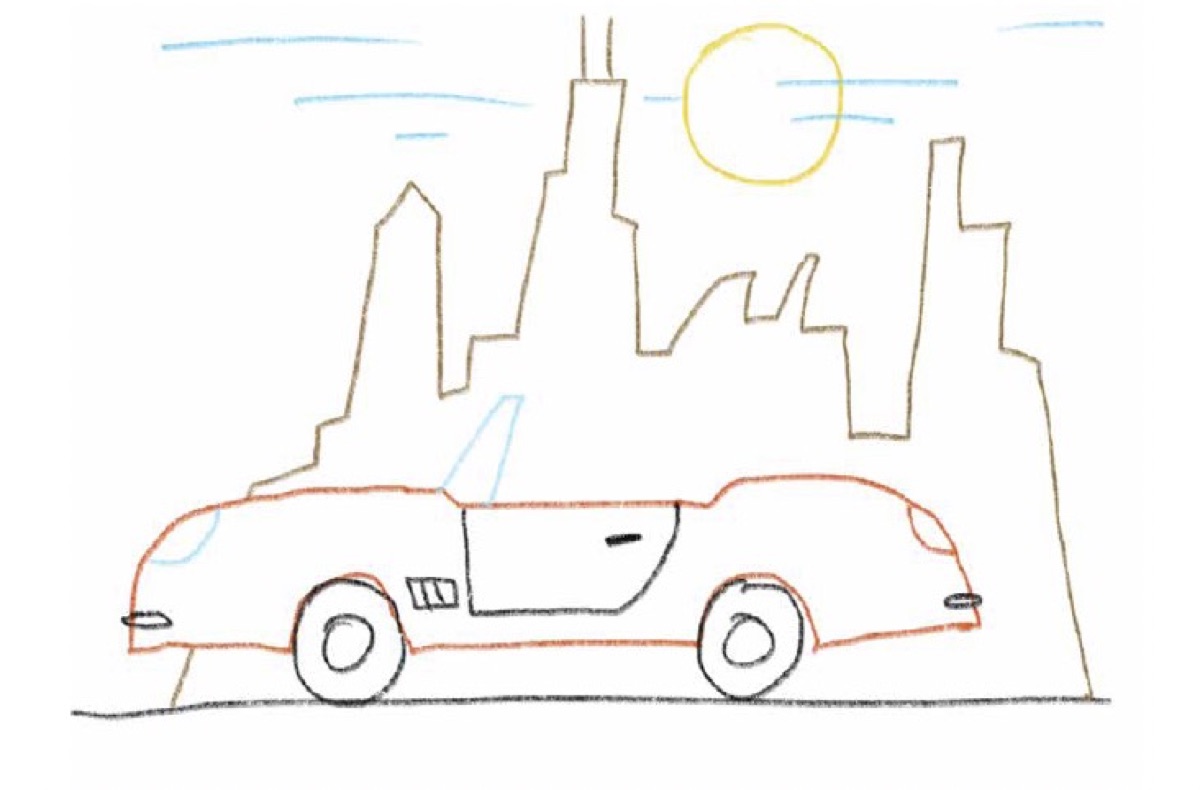
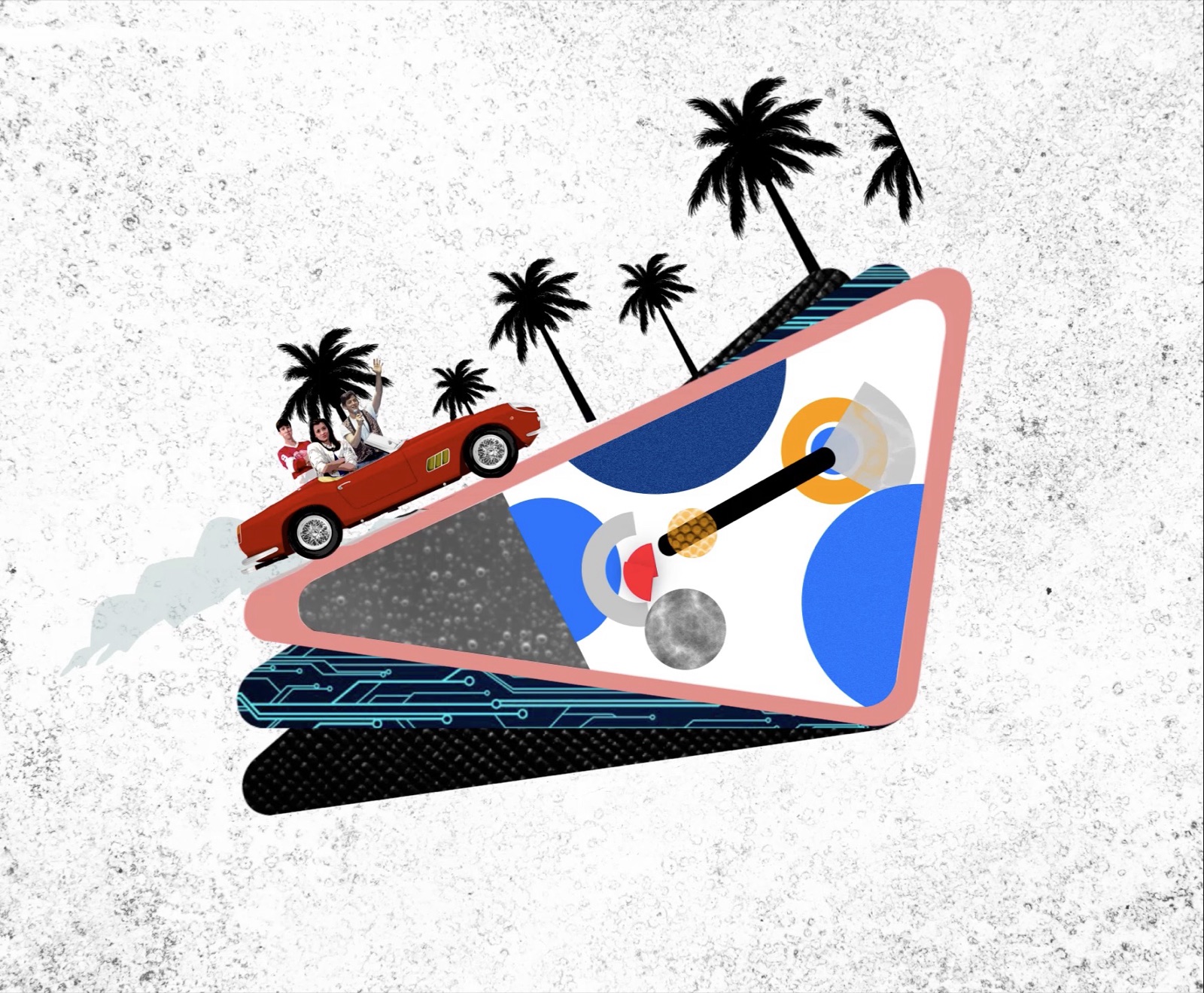
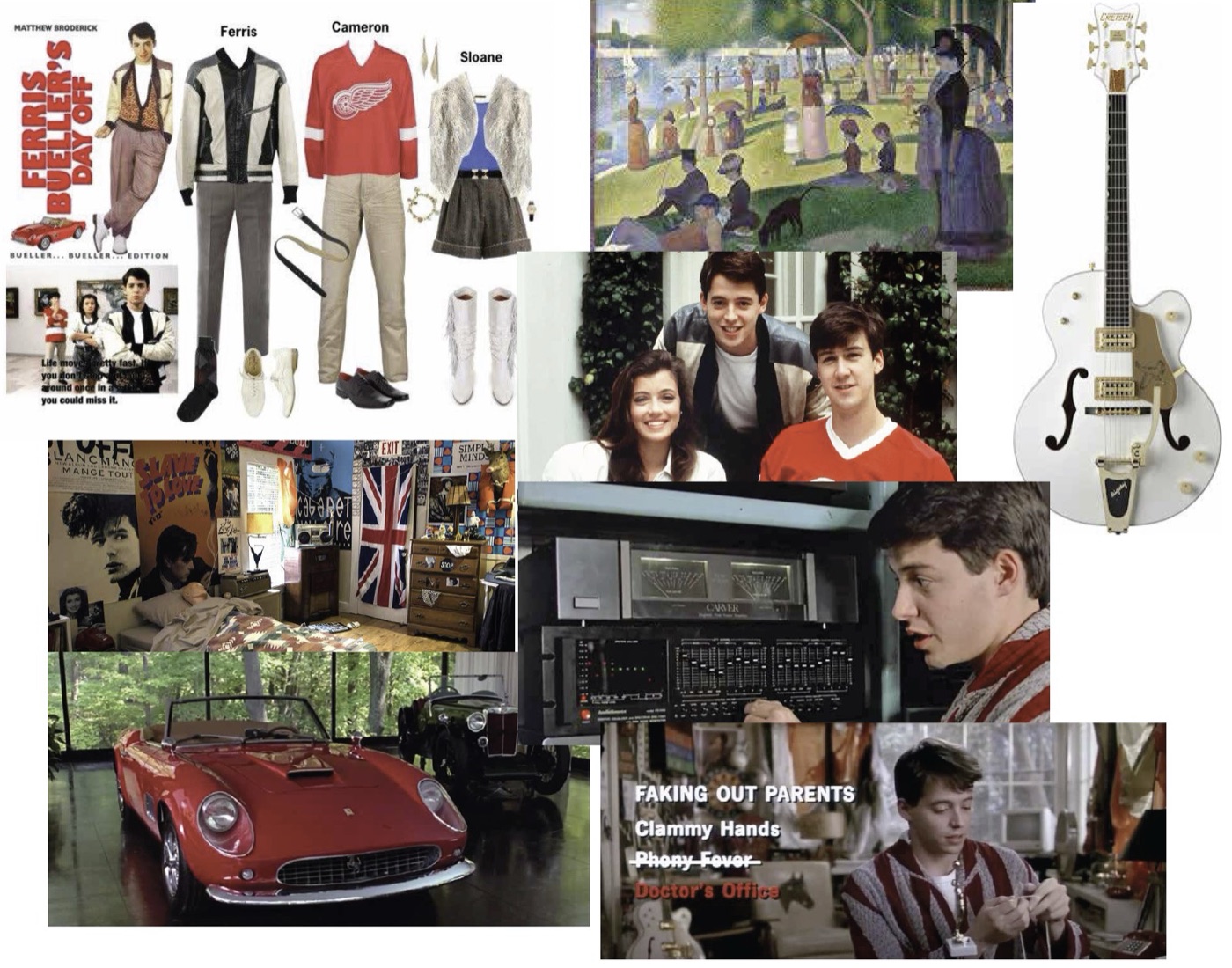
Collage animation carries the character's main features: face, clothing and the Ferrari he takes to New York. The piece keeps the film's original 1.33:1 aspect ratio and uses its original sound effects and score.
Visual direction
Colour
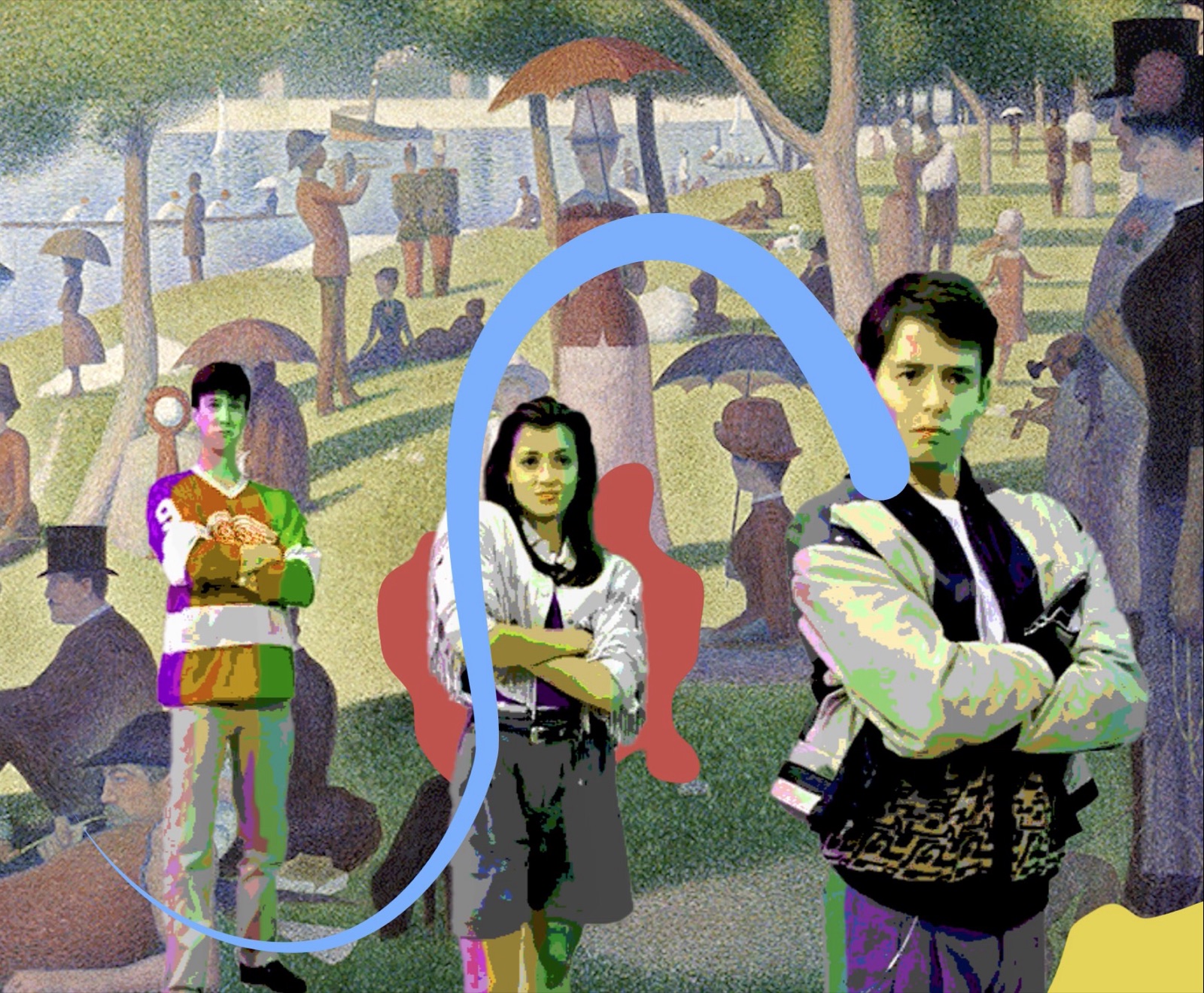
Most characters are rendered in a monotone palette, drawing focus to the motion graphics and kinetic typography, which burst in bright, saturated colours against the muted figures.
Shape & form
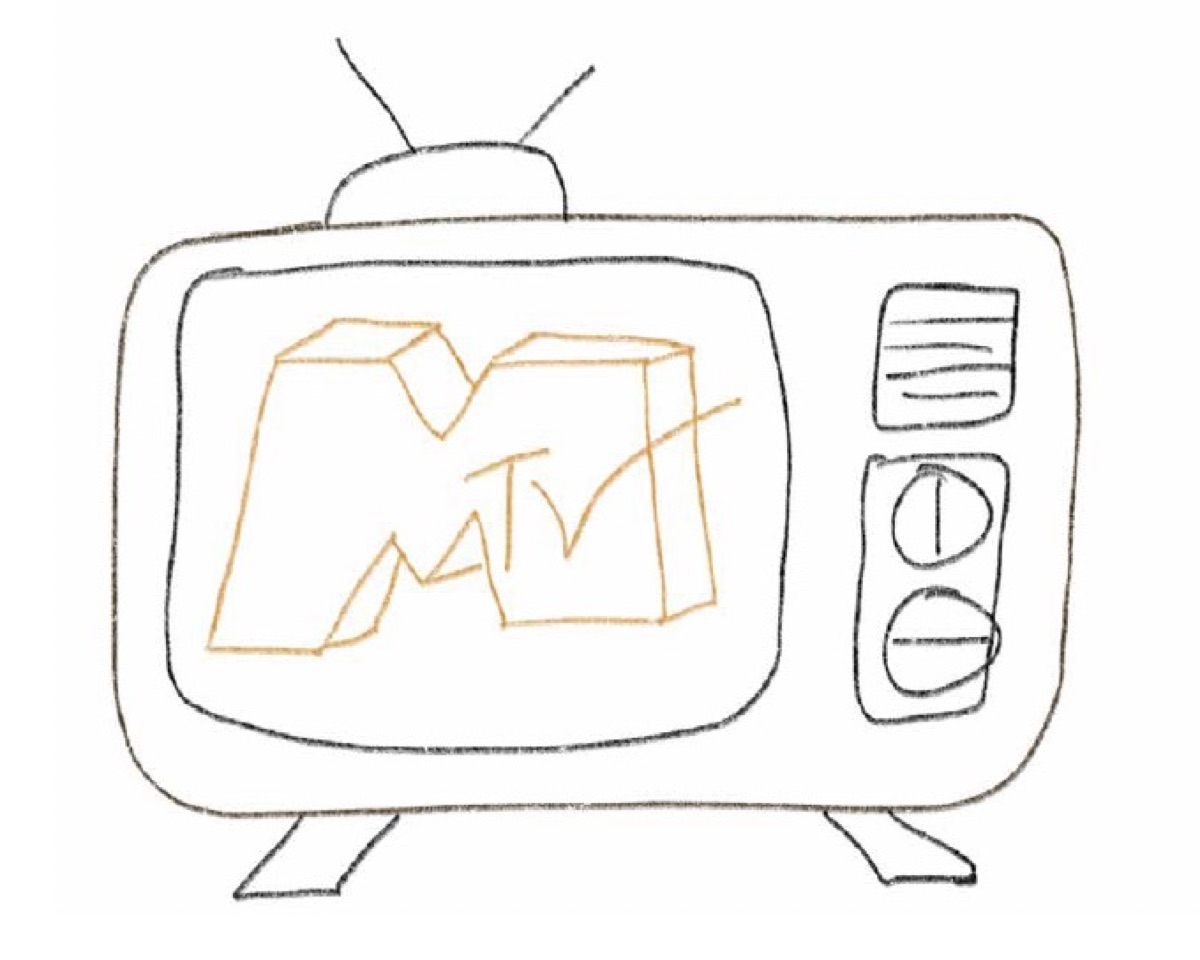
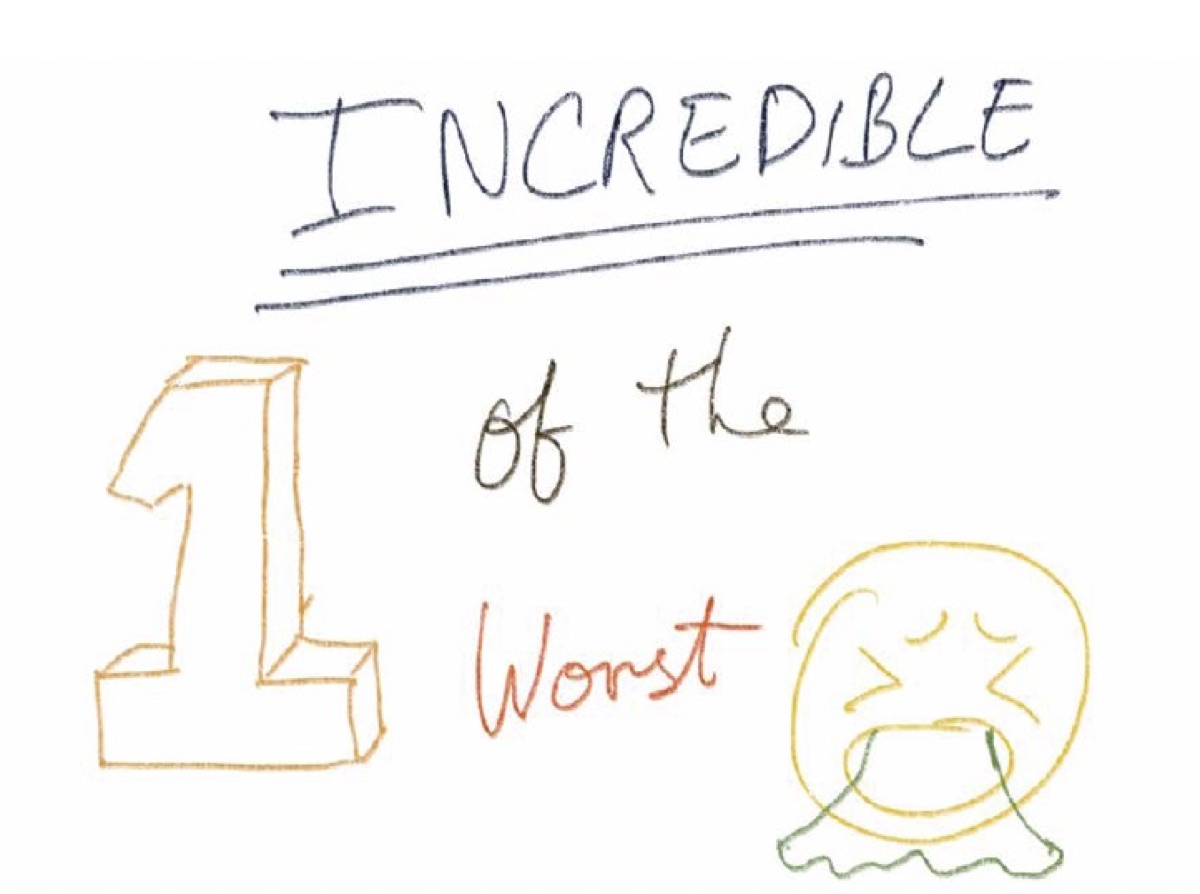
A mix of 3D and 2D shapes with textures from the 80s and 90s. The forms feel tactile and handcrafted, referencing the collage aesthetic of the era the film was made in.
Rotoscope
Selected characters are rotoscoped from the film and composited with vector shapes and kinetic text, blending the real and the illustrated into one animated world.
Motion
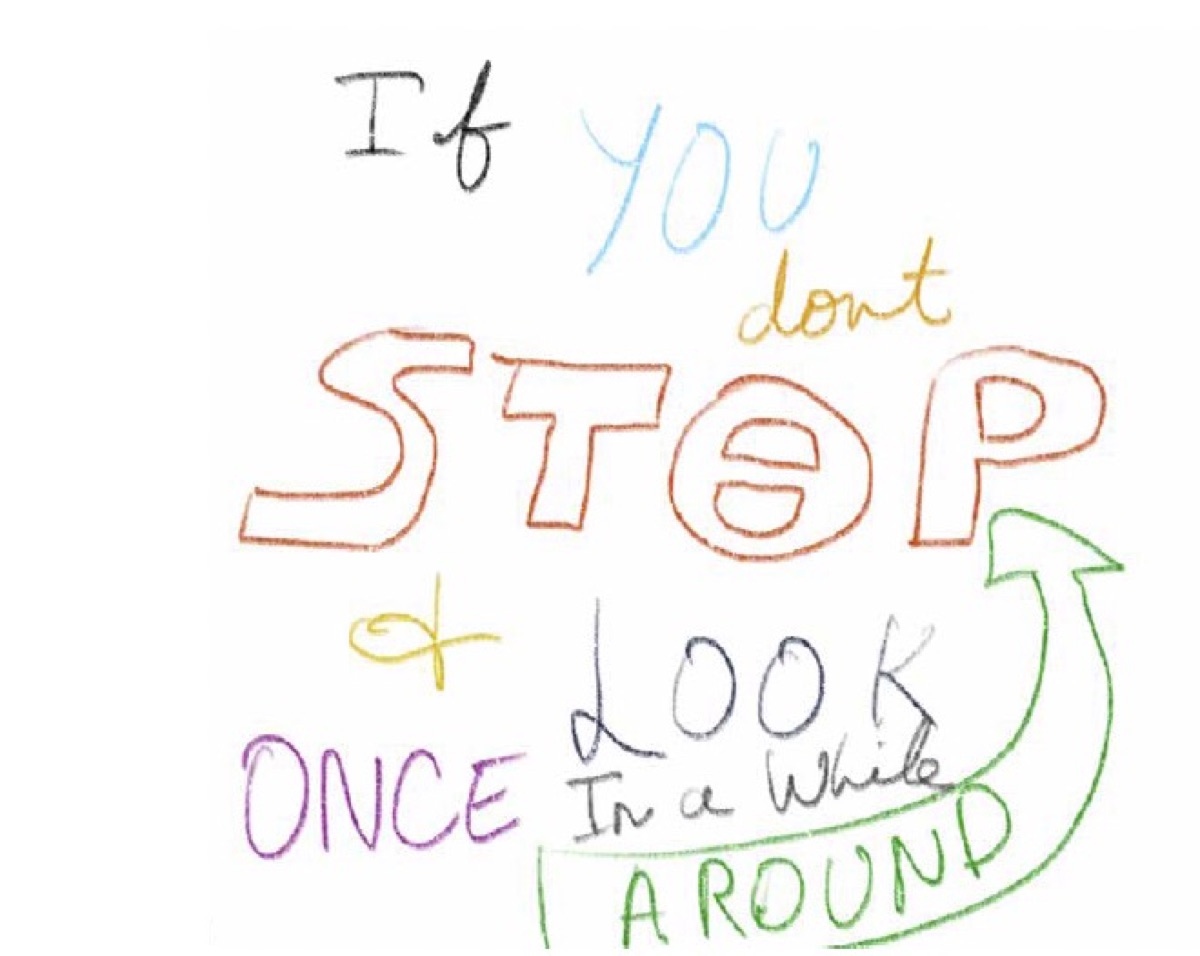
Random, energetic movement. Typography uses multiple typefaces to exaggerate the weight of specific words, reflecting Ferris's larger-than-life delivery.
Transitions
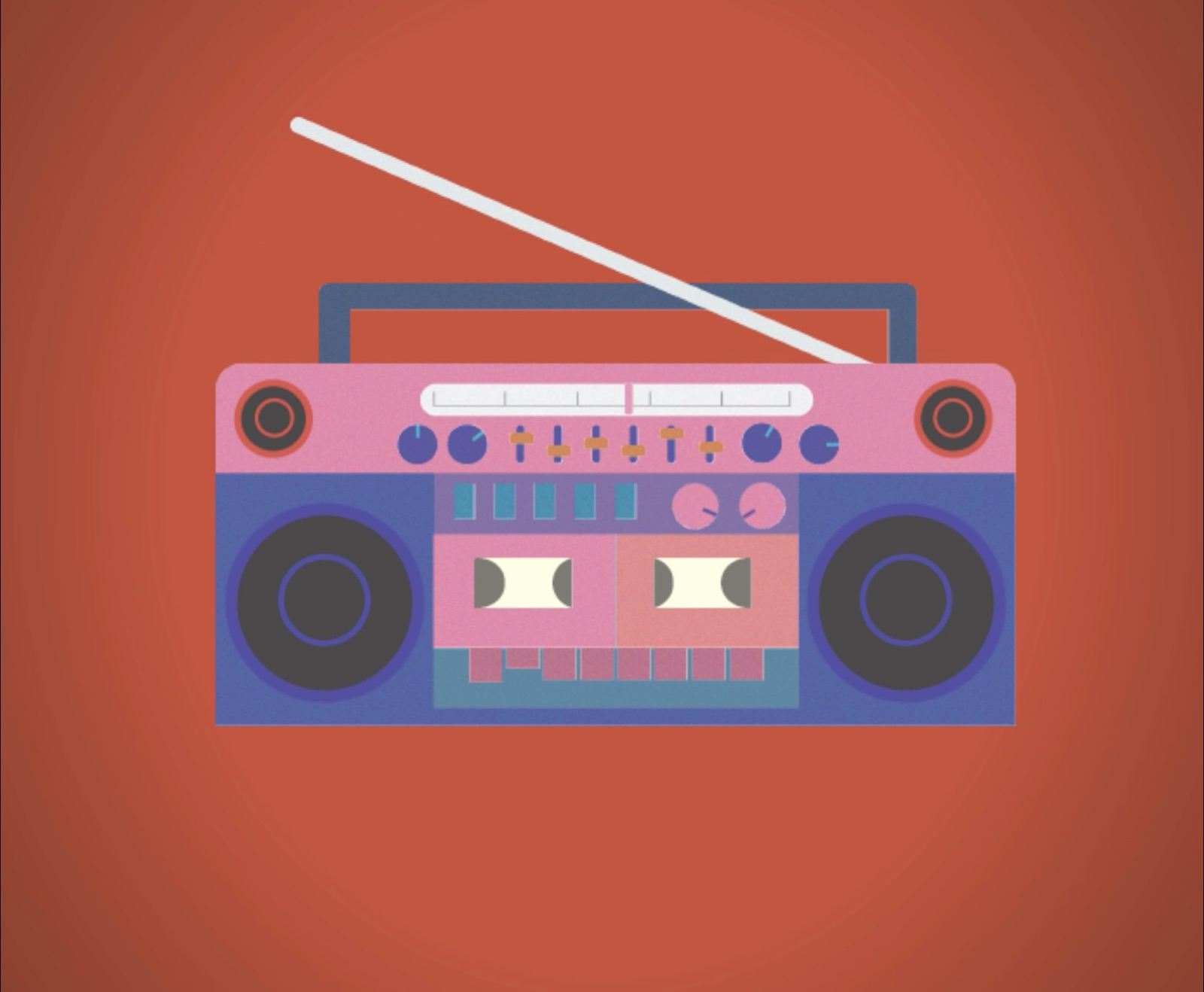
Scene transitions are driven by objects on screen, wiping or zooming into the next scene. The Ferrari, stereo and guitar all act as transition devices.
Fourth wall
True to the film, the animation breaks the fourth wall: acknowledging the audience, referencing the era's pop culture, and celebrating Ferris Bueller's place in film history.
Frames from the film
Mood board
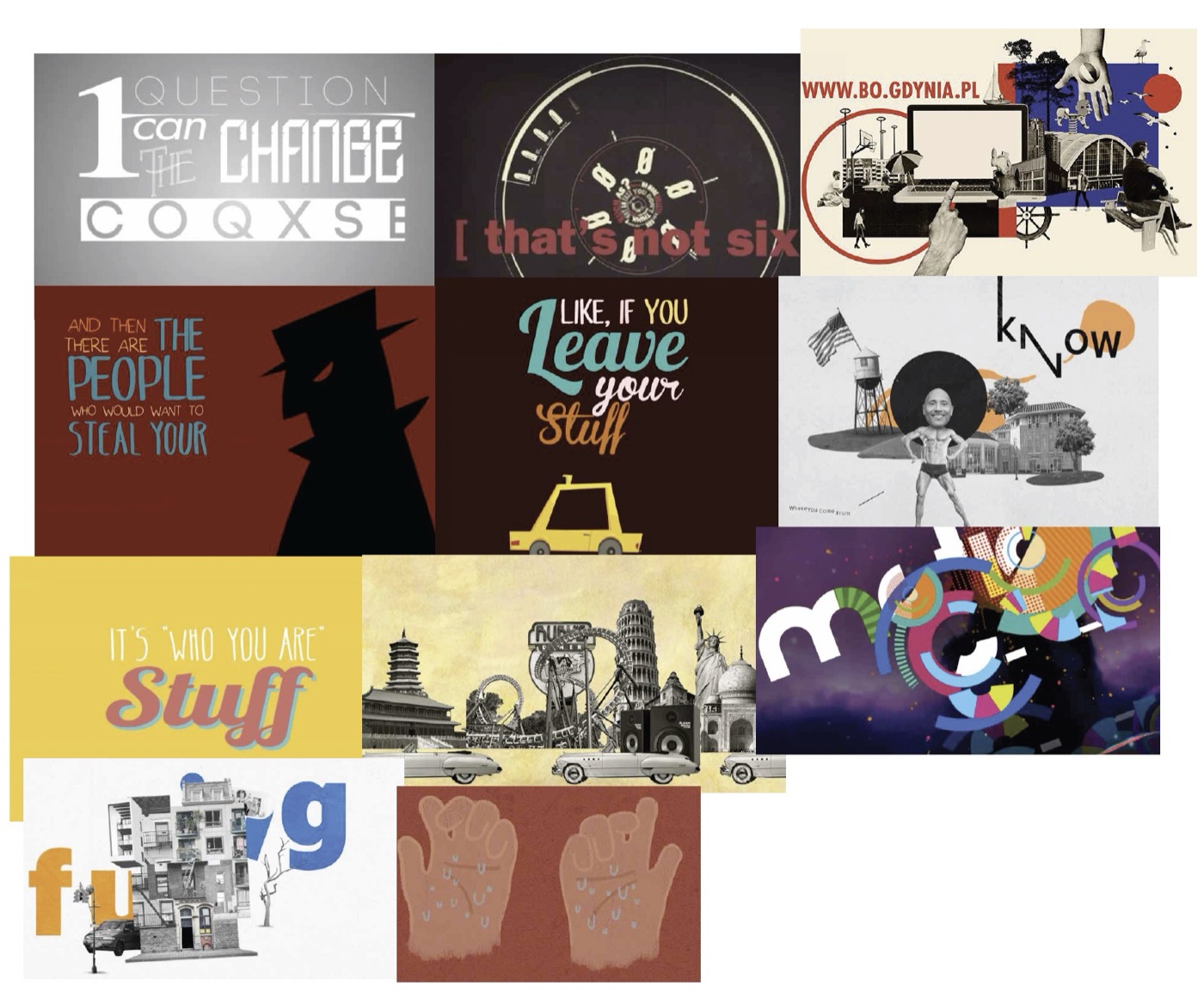
Storyboard